





By Edith Mugabe/ Environmental Correspondent
The Zimbabwe Lawyers for Human Rights (ZLHR) has called for greater accountability and community participation in the protection of wetlands and other vital water sources, amid growing concerns over developments taking place on environmentally sensitive land in the country.
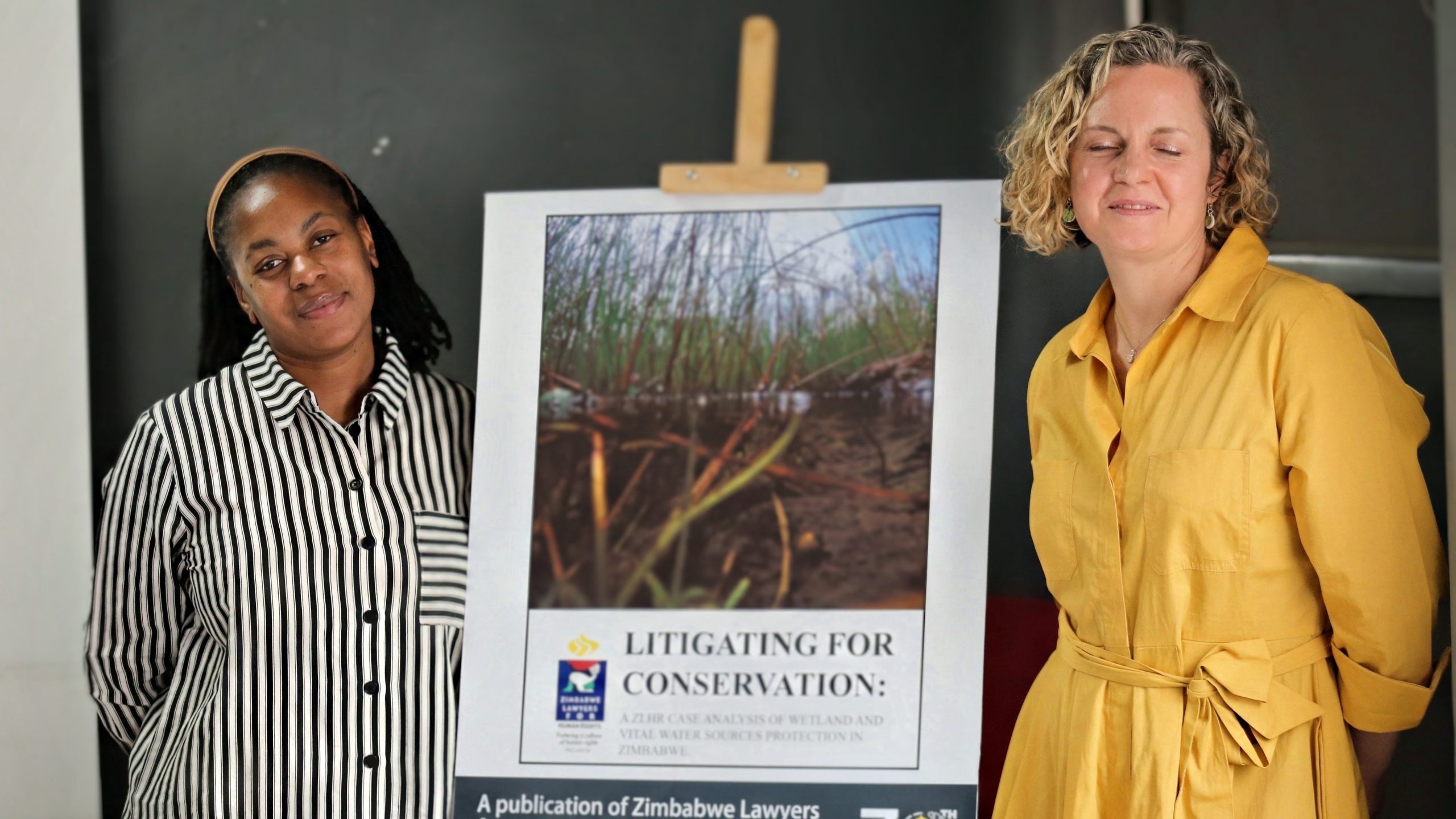
The call was made on Friday thus week, during the launch of ZLHR’s publication, ‘Litigating for Conservation: A ZLHR Case Analysis of Wetland and Vital Water Sources Protection in Zimbabwe’.
Speaking at the launch, Julia Pierini of Birdlife Zimbabwe emphasised that, “communities have an important role to play in monitoring and protecting wetlands within their areas.
“Protection of wetlands should not be left solely to government agencies and environmental authorities, but should also involve communities that live alongside these critical ecosystems.”
The call comes against a backdrop of continued disputes over developments on wetlands, with questions being raised over how residential stands are allocated and how authorities respond after construction has already taken place.
Rueben Akilli of the Combined Harare Residents Association (CHRA) highlighted what he described as “confusion and contradictions among authorities responsible for land allocation and environmental protection.”
He questioned how residents could be allocated residential stands by local authorities, only for the same authorities to later declare that the developments are illegal.
“The council which is giving people stands is the one also coming years later saying, ‘makavaka pasipo’,” Akilli said.
The situation, he argued, raises questions about the coordination and accountability of local authorities, particularly where residents acquire land through seemingly legitimate channels before being confronted with enforcement action.
The concerns highlight a broader challenge in Zimbabwe’s management of wetlands, where environmental protection, urban expansion, housing demand and local authority land administration often intersect.
The publication draws on ZLHR’s experience in strategic litigation and regulatory engagement in challenging unlawful developments on wetlands, while examining Zimbabwe’s constitutional and legislative framework for environmental protection.
ZLHR’s publication examines key cases from its litigation portfolio and considers how strategic litigation can be used to strengthen regulatory compliance and accountability in the protection of wetlands and vital water sources.
The organisation also draws attention to Zimbabwe’s constitutional and legislative obligations, as well as relevant regional and international environmental standards.Wetlands play a critical role in regulating water systems, reducing flooding, supporting biodiversity and sustaining communities.
However, their protection continues to face pressure from construction, urban expansion and other forms of development.The discussions at the launch therefore underscored the need for clearer coordination between local authorities, environmental regulators and communities.
For residents, stronger community monitoring could help identify potentially harmful developments at an early stage, while improved accountability among authorities could help prevent situations where citizens are allocated land in environmentally sensitive areas only to face demolition or enforcement action later.
The launch of the ZLHR publication comes as calls grow for Zimbabwe to strengthen the enforcement of laws protecting wetlands and ensure that development does not come at the expense of the country’s vital water sources.The publication is expected to contribute to ongoing conversations around environmental justice, strategic litigation and the protection of Zimbabwe’s wetlands.