





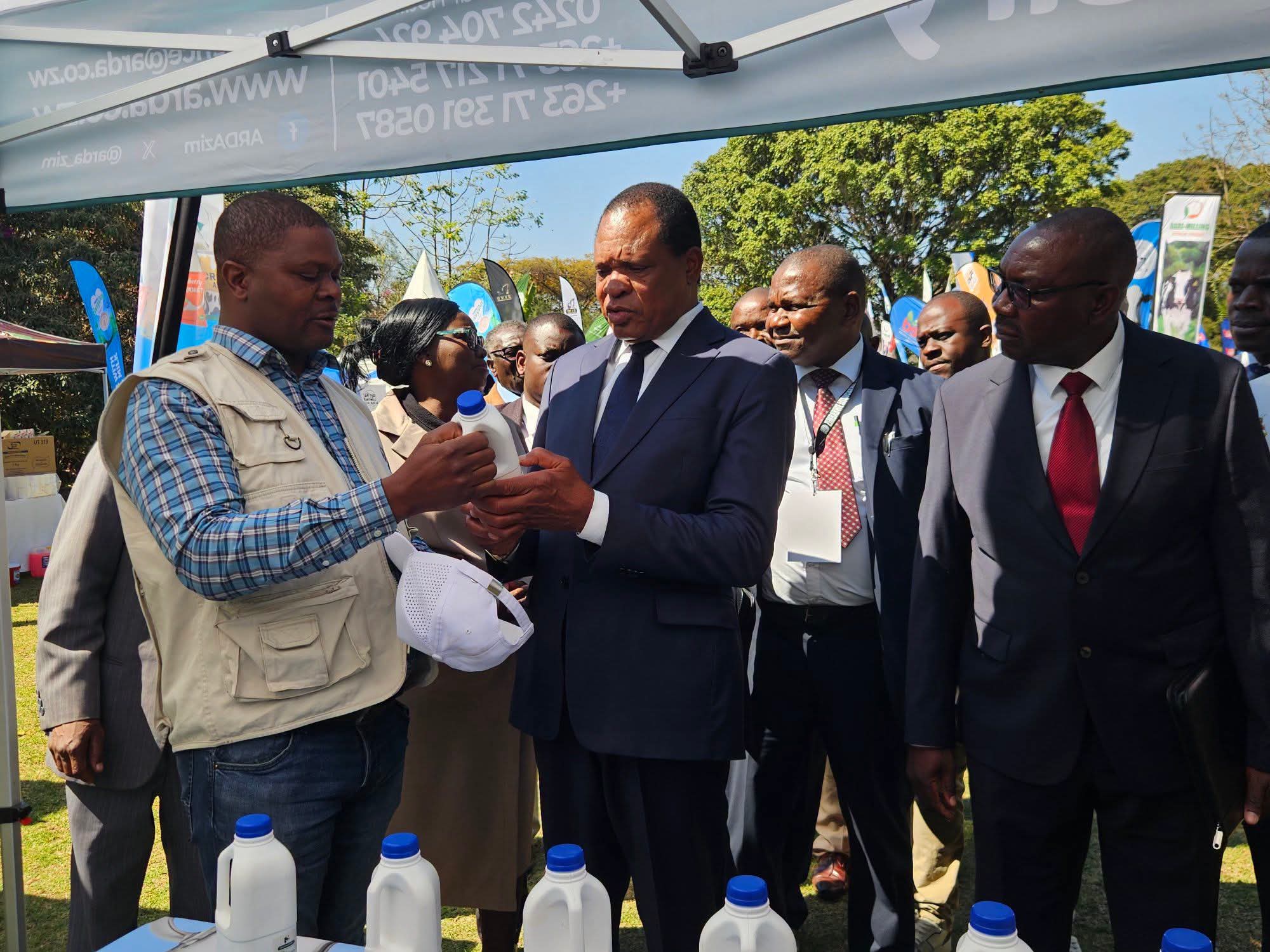
Zimbabwe’s dairy sector must embrace innovation, industrialisation and data-driven decision-making if it is to become a competitive, sustainable and export-oriented industry, Minister of Lands, Agriculture, Fisheries, Water and Rural Development Dr Anxious Jongwe Masuka has said.
Speaking at the Zimbabwe Association of Dairy Farmers’ 12th Annual General Meeting in Harare, Dr Masuka said the country’s dairy industry had made remarkable progress, with annual milk production increasing from less than 17 million litres in 2017 to 155 million litres in 2025.
He said the sector’s next phase of growth should be driven by innovation and industrialisation in line with Zimbabwe’s Vision 2030, which seeks to transform the country into an upper-middle-income economy.
He also challenged stakeholders to strengthen the collection and use of industry data, including statistics on milk production, employment, value addition, processing capacity and the overall economic contribution of dairy products.
He said, “reliable data would enable policymakers and industry players to make informed decisions that support investment, improve productivity and enhance competitiveness.”
despite the sector’s growth, Dr Masuka acknowledged that high production costs remain a major challenge, with feed accounting for between 60 and 80 percent of the total cost of producing milk.He urged the industry to develop innovative solutions to reduce production costs while improving efficiency and profitability.
The minister said Government would continue creating an enabling policy environment to support dairy farmers and processors as Zimbabwe works towards achieving self-sufficiency in milk production and expanding exports to regional markets.
The Zimbabwe dairy industry has steadily recovered over the past decade through investments in improved genetics, farmer support programmes and public-private partnerships aimed at rebuilding the national herd and increasing milk output.