





Staff Writer
ARDA Seeds is targeting Zimbabwe’s dependence on imported hard wheat with the commercial production of its locally bred Ncema variety, which the State-owned seed producer says has the quality characteristics required by millers and bakers.
The move comes as Zimbabwe strengthens domestic seed production as part of efforts to reduce agricultural imports, with ARDA Seeds saying Ncema has been tested by laboratories and the processing industry and has demonstrated hard-wheat qualities traditionally sourced from outside the country.
ARDA Seeds, whose shareholder is the Mutapa Investment Fund, currently contracts about 1 000 hectares of seed wheat nationally, producing around 8 000 tonnes of certified seed per production cycle.
The company intends to double the contracted area to 2 000 hectares, which would raise production to about 16 000 tonnes per cycle, against Zimbabwe’s annual wheat seed requirement of about 14 000 tonnes.
ARDA Seeds general manager for Operations Innocent Musiiwa said the expansion was being supported by private seed producers and was aimed at ensuring adequate supplies of quality seed for future wheat production.
“The seed that we are producing this year is supposed to feed into production cycles for next season,” Musiiwa said.
He said the locally bred Ncema variety was specifically suited to the requirements of the milling and baking industry.
“In terms of its qualities, Ncema is a hard wheat variety which we have bred for good quality white flour and high protein content ranging from 13 to 17 percent,” Musiiwa said.
The variety has a wet gluten content of about 37,6 percent and a falling number of approximately 420 seconds, characteristics that ARDA Seeds says make it suitable for processors requiring hard wheat.
Musiiwa said Zimbabwe’s milling and processing industry had faced challenges in accessing hard-wheat qualities locally, resulting in imports and higher processing costs.
“The milling and processing industry in Zimbabwe has been facing a lot of challenges in terms of accessing hard wheat qualities in Zimbabwe. So there has been a lot of importation and huge cost in terms of processing, which has had a resultant effect on the price of bread in Zimbabwe,” he said.
He said Ncema could provide processors with a locally produced alternative to imported hard wheat.
“ARDA Seeds has come up with the variety that is called Ncema, which has been tested by several laboratories and the processing industry and has proved to provide an answer to the shortage of hard wheat qualities in Zimbabwe,” Musiiwa said.
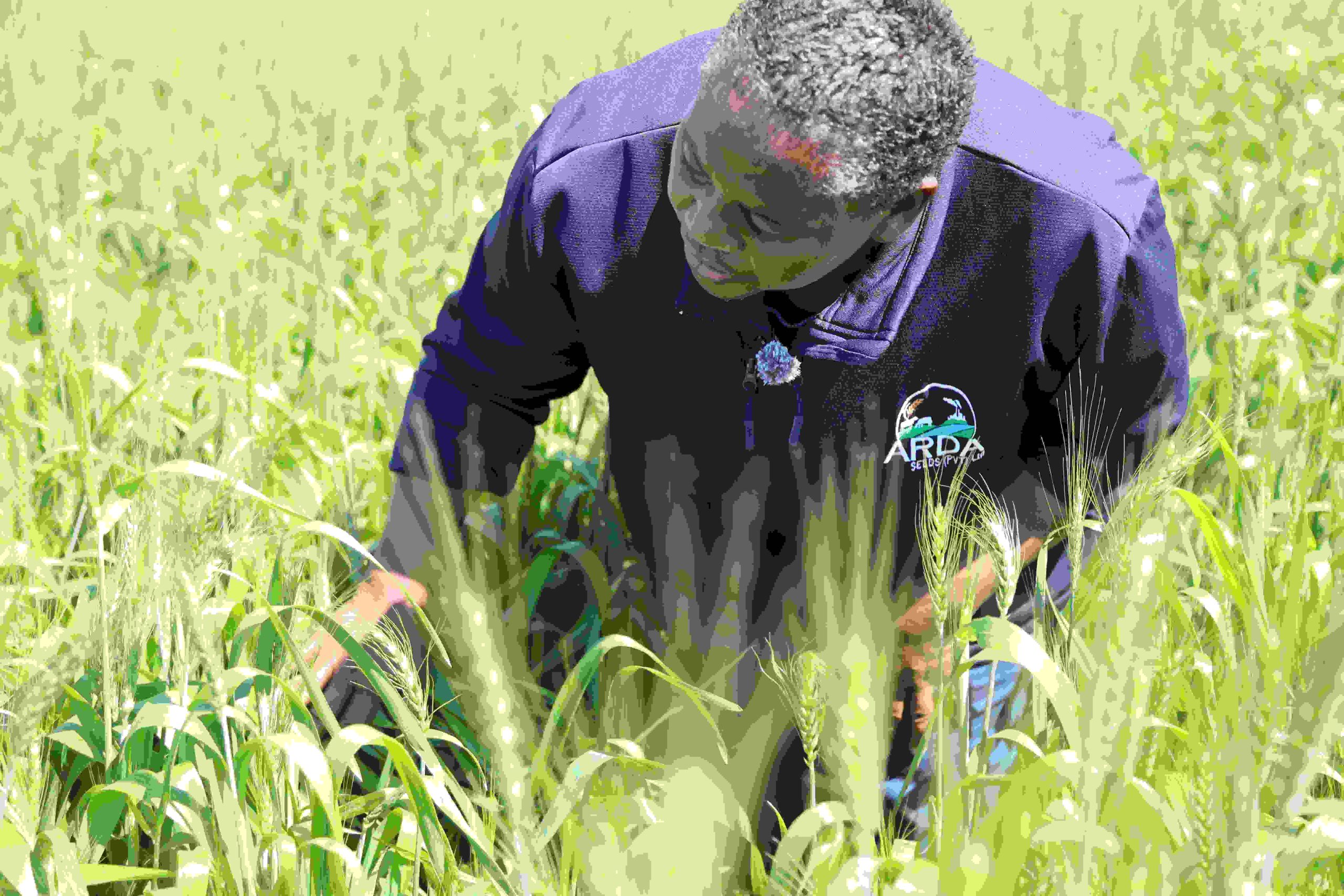
Ncema is a medium-maturing spring wheat variety that reaches physiological maturity in 125 to 130 days and can produce up to 10 tonnes per hectare under optimum management.
Its semi-dwarf and erect structure also reduces lodging and facilitates harvesting, while the variety has demonstrated resistance to common diseases including rust and powdery mildew.
At Granite Flat Farm in Makoni District, ARDA Seeds has contracted farmers to produce Ncema seed, including 40 hectares being grown by farmer Takudzwa Nyabadza.
Nyabadza said the variety had performed well on his farm, while the contract arrangement had provided access to inputs, agronomic support and a guaranteed market.
“We get support with the inputs, we get support with agronomy services, what to do, when and why. And we also get support with the market through the contract,” Nyabadza said.
He said the quality seed produced by contracted farmers would ultimately benefit producers beyond the ARDA Seeds programme through channels including the Presidential Input Scheme and commercial outlets.
“The seed produced from this farm gets to farmers through programmes like the Presidential Input Scheme or through shops. They are guaranteed quality seed that grows well, gives good yields, and improves incomes in villages,” Nyabadza said.
ARDA Seeds Board vice chairperson Dr Patience Siwali said the development of domestic seed production was an important step in reducing Zimbabwe’s reliance on imported agricultural inputs.
“For a long time, wheat was imported in Zimbabwe. But I must say for the last three years we have not imported seed,” Siwali said.
She said the company was working towards restoring Zimbabwe’s position as a major agricultural producer.
“We are on the route to reclaiming the breadbasket position. With such a crop as seed, it then goes into the actual production of the wheat in the next stage. We are so set on being the breadbasket once again. This is not a dream, it is a reality,” she said.
Siwali said ARDA Seeds was supporting contracted farmers with fertilisers, crop-protection chemicals and agronomic expertise to ensure the production of quality certified seed.
The company is also planning to strengthen irrigation support for contracted farmers as part of efforts to protect seed production from changing weather patterns.
“We understand the challenges of climate. We are going further to support irrigation, ensuring that the crop never lacks water,” Siwali said.
Another contracted farmer, Kamusasa Felix Farai, said he had planted 60 hectares of Ncema and was targeting 480 tonnes from the crop at an expected yield of eight tonnes per hectare.
The expansion of domestic seed production is expected to strengthen Zimbabwe’s wheat value chain by ensuring farmers have access to adequate locally produced certified seed, while the development of Ncema provides a potential domestic source of hard wheat for the milling and baking industries.