





A US$2 million investment in Zimbabwe’s aquaculture sector has generated an estimated US$3.6 million in annual economic benefits, reaching 4,206 fish farmers and increasing fish production by an additional 1,909 tonnes annually, the Food and Agriculture Organisation (FAO) has said.
The gains were realised under the FISH4ACP programme, which supported the development of a sustainable farmed tilapia value chain in Manicaland and Mashonaland provinces through improved access to quality fingerlings, affordable fish feed, technical skills and markets.
FAO Sub-regional Coordinator for Southern Africa and Country Representative in Zimbabwe, Dr Patrice Talla Takoukam, said approximately 80 percent of the farmers reached by the programme had adopted improved aquaculture technologies and business practices.
“These improvements are estimated to contribute to additional 1,909 tons of fish production annually, representing approximately 3.53 million US dollars in additional annual fish sales,” he said, adding that when feed cost savings are included, quantifiable benefits are estimated at approximately 3.60 million US dollars per year.
The programme’s economic assessment established a benefit-cost ratio of 2.92 to 1, meaning every dollar invested is estimated to generate almost US$3 in economic value.
One of the key interventions was the development and testing of fish feed made from black soldier fly larvae, which has the potential to reduce feed costs by approximately 40 percent while maintaining comparable fish growth performance.
Talla said the innovation could improve the profitability of aquaculture enterprises by reducing dependence on expensive conventional feeds.
“Affordable, locally produced feed can therefore improve the profitability and competitiveness of the aquaculture enterprises,” he said.
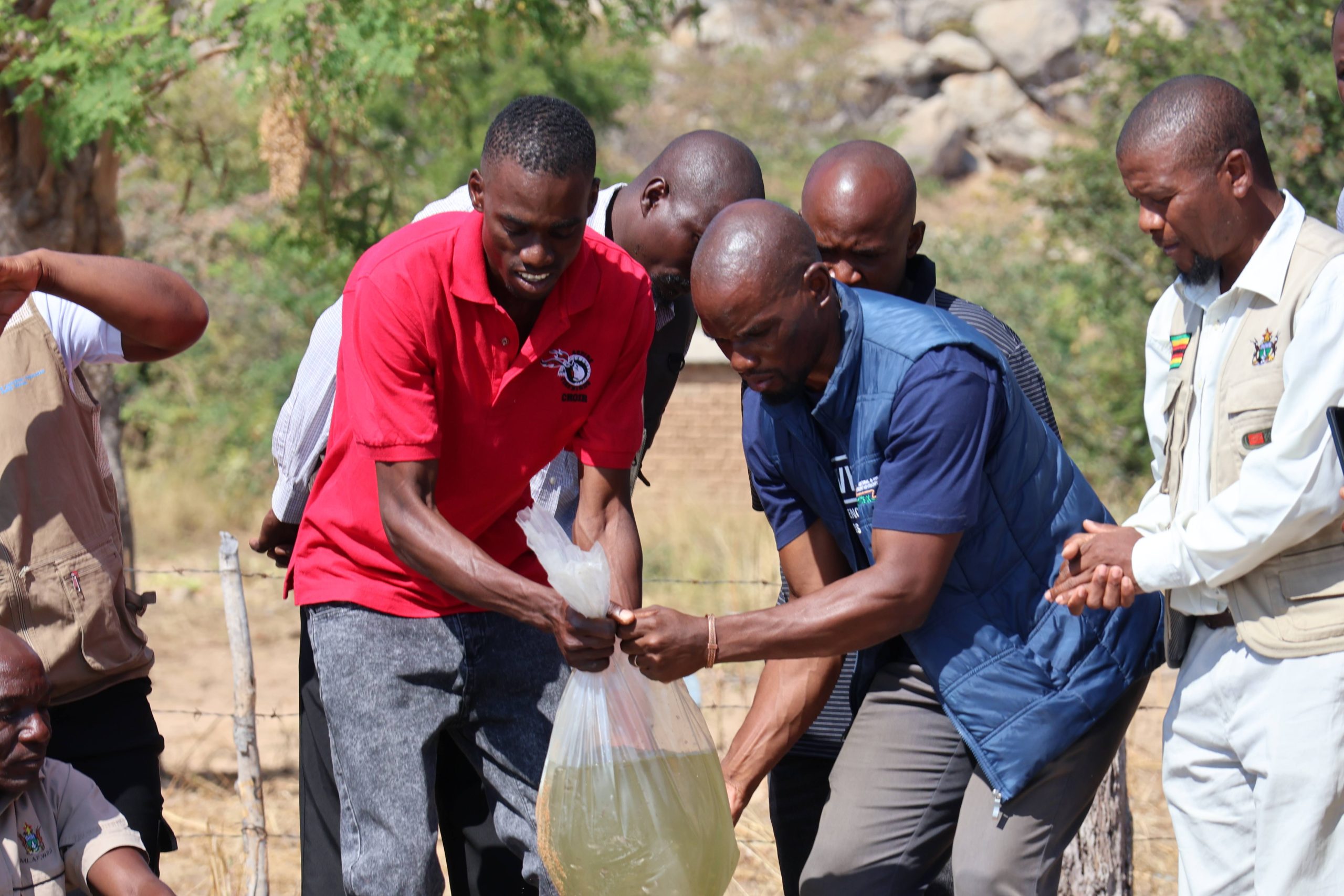
The programme also supported decentralised fingerling production and distribution, with two fingerling hubs established by 2025, serving more than 1,000 farmers.
It further strengthened the participation of women, young people and marginalised groups, with 350 people receiving targeted support through an inclusivity toolkit.
He also said the programme had helped strengthen the systems surrounding fish farmers, from input supply and production to farmer organisation and market access.
Representing the Ministry of Agriculture, Mechanisation and Water Resources Development Permanent Secretary, Professor Obert Jiri, Livestock and Fisheries Production Department deputy director Admire Mbundure said the programme had helped government establish the extent of fish farming in the country and identify constraints affecting production.
He said the initial value-chain assessment conducted by Chinhoyi University of Technology provided important information on the distribution of fish farmers, their production methods and the challenges they faced.
“Limited access to quality fingerlings, high cost of production due to the high cost of feed,” he said, identifying some of the major constraints facing the sector.
Mbundure said the clustering of farmers, facilitated by the Zimbabwe Fish Producers Association, had improved the delivery of services and access to inputs through organised production hubs.
The project also supported the rehabilitation of government breeding facilities at Henderson Research Station in Mazowe, Matobo in Matabeleland South and Makoholi in Masvingo.
“We are proud to announce that, small though, but we are beginning to see fingerlings coming from those breeding sites as a result of the intervention of this project,” he said.
However, he said more work was needed to address regulatory and infrastructure gaps, including the development of a Fisheries and Aquaculture Bill and completion of a cold-chain facility at Odzi in Manicaland.
European Union Head of Cooperation Anna Cichocka said Zimbabwe had considerable potential to expand its aquaculture industry, particularly as demand for fish continued to grow while much of the demand was still being met through imports.
“This represents a real opportunity to increase local production, create jobs, and develop businesses, particularly in rural areas,” she said.
Cichocka said the sustainability of the programme’s investments would depend on stronger government ownership, organised farmer groups and increased private-sector participation.
“Some of the new businesses and facilities also need to prove that they can operate successfully without project support,” she said.
She identified the establishment of the Zimbabwe Aquaculture Value Chain Council as an important development in bringing together government, farmers, researchers and businesses to address common challenges and identify investment opportunities.
FAO National Professional Officer and Project Programme Coordinator Paul Mwera said the programme’s legacy should be measured by the capacity of local institutions and communities to sustain the gains beyond the project’s lifespan.
“The legacy of FISH4ACP is actually not in the structures that we have put up. It’s also not in the projects or infrastructure alone that we put up. Its true legacy lives in the people empowered, those people that we’ve empowered, that’s where we have our legacy,” he said.
As the programme draws to a close, FAO has called for increased investment in hatcheries, affordable fish feed, processing, cold-chain infrastructure, access to finance and markets to expand the country’s aquaculture industry.
Talla said the next phase should focus on scaling up the interventions and attracting public and private investment to ensure that farmers can build profitable enterprises.
“The evidence is therefore before us, the opportunity is clear, now is the time to invest and scale,” he said.