





Staff Reporter
ZIMBABWE wants its mining sector to generate wealth, jobs and development, but in communities such as Mberengwa, the more immediate question is whether the people living on top of the country’s mineral deposits are being asked to sacrifice too much for that promise.
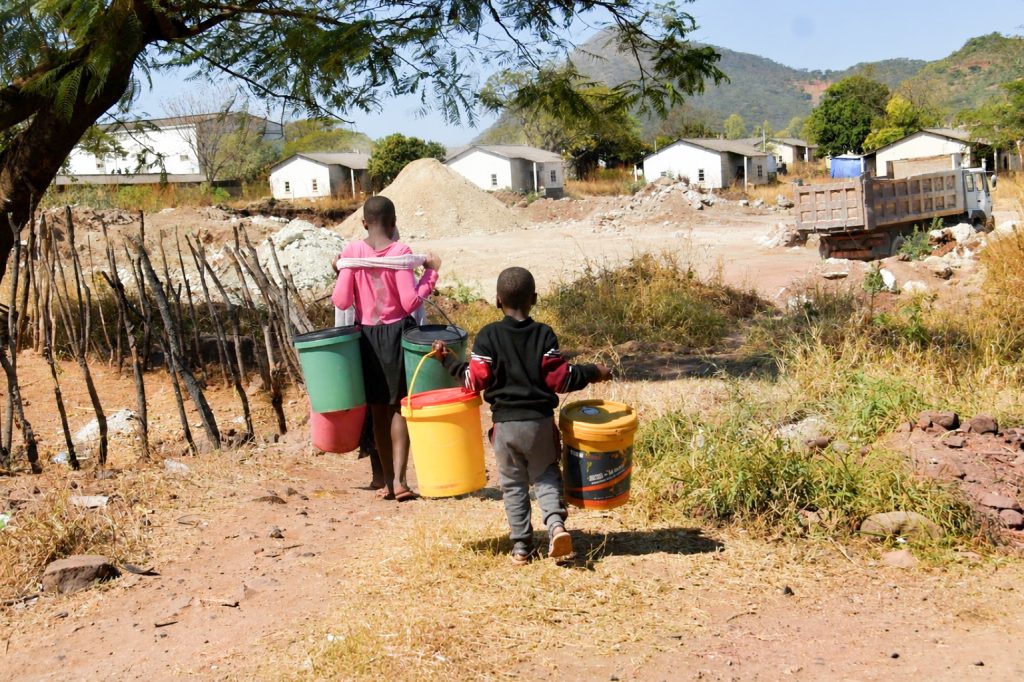
For Sthembisiwe Shava, the price of environmental change is measured in something far more basic than mineral exports.
It is measured in water.
The river that once supplied her household is no longer considered safe for drinking.
“The water is no longer drinkable and the river has become heavily silted,” Shava said.
The deterioration forced her family to find its own solution.
Shava and her husband, Newman Mabika, used pension money to drill a borehole at their homestead.
The private investment now supplies the family with water for domestic use and gives them an opportunity to irrigate crops.
But it also exposes a problem that Government’s mining policies have yet to adequately answer: why should rural families have to spend their own money replacing or supplementing natural resources that communities have traditionally depended on?
Shava’s experience is part of a wider concern in the area, where residents say mining has increasingly competed with agriculture and placed pressure on land and water resources.
Mabika alleges that mining has spread across parts of the community, with some operations taking place without the required licences.
“A lot of the mining being done is illegal,” he said.
“Mining has become widespread, and some of these people do not even have licences from the Ministry of Mines.”
He said some miners have entered agricultural fields, disturbed infrastructure and dug in areas used by families for farming.
“When these people come, someone just starts digging,” Mabika said.
“You can find that there is a water line or some other infrastructure, and they start digging in people’s fields.”
Such activities, residents argue, create a conflict between mineral extraction and livelihoods that Government must address more decisively.
Mabika said some disputes are reported to the police, but unresolved cases leave households uncertain about how effectively they can protect land and infrastructure that underpin their livelihoods.
The concerns extend to water.
According to Mabika, some rivers have become blocked and heavily silted, while pools previously used by residents as water sources have disappeared.
“Some of the pools where people used to get water are gone,” he said.
In Mberengwa, the loss of water resources has implications beyond household consumption.
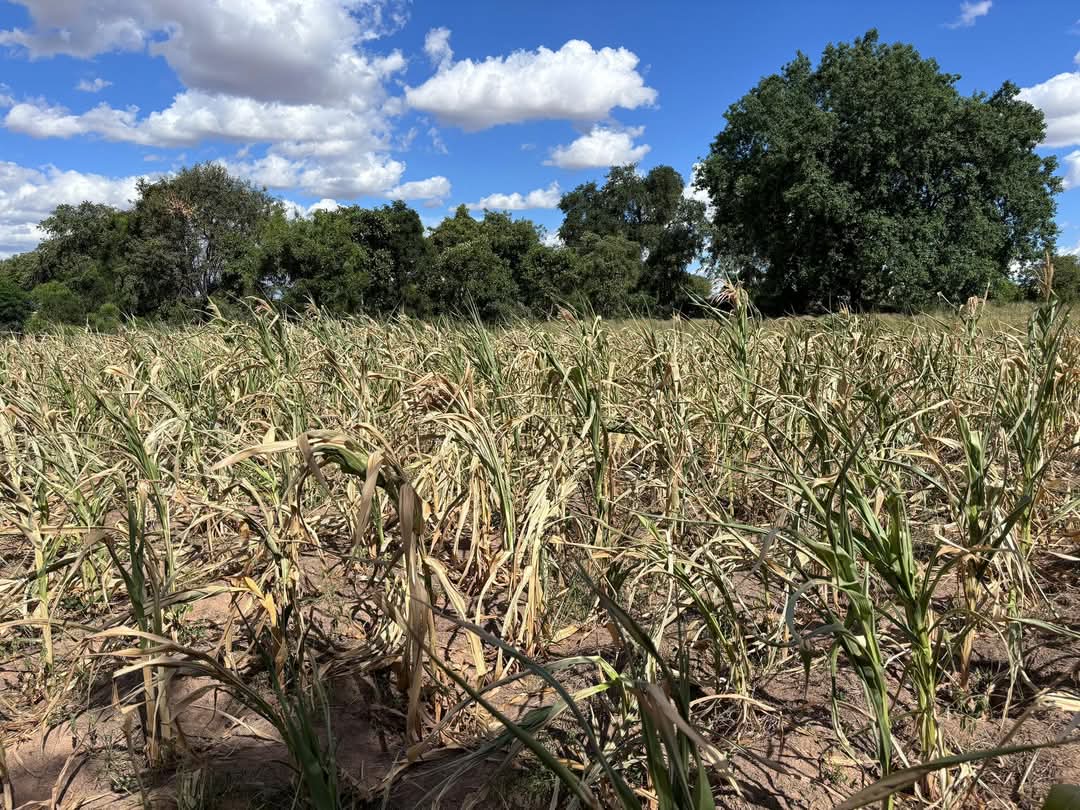
Agriculture is already constrained by a relatively short rainy season, making access to reliable water critical for food production.
“Here in Mberengwa, we only receive rainfall for a short period,” Mabika said.
“That is why Mberengwa is known for small grains. They do better here, including groundnuts, roundnuts, sorghum and millet.”
When water becomes unreliable, therefore, the consequences move from the river to the field and eventually into the household.
Reduced water availability can constrain irrigation, weaken agricultural production and reduce opportunities for families to earn income from surplus crops.
Women can bear a particularly heavy share of that burden because much of the work associated with household water, food preparation, hygiene and small-scale food production remains unpaid.
Environmental degradation can consequently increase women’s workload without appearing in official calculations of the economic cost of mining.
This is one of the issues being raised by ActionAid Zimbabwe through its #PayTheHarm campaign.
The campaign challenges the assumption that mineral extraction can automatically be described as “clean” because some minerals are linked to the global transition towards cleaner energy.
It argues that a just transition must also consider the communities where those minerals are extracted and the environmental and social costs they may carry.
ActionAid Zimbabwe Country Director Dr Selina Pasirayi said women in mining-affected communities should be central to documenting those experiences and shaping responses.
“Women will document their lived experiences through community dialogues, feminist research, testimonies, digital storytelling and youth-led media,” she said.
She said affected women should also participate directly in policy discussions and engagements with decision-makers.
“This ensures the campaign does not speak for women, but supports women to define the problems, propose solutions and hold decision-makers accountable,” Pasirayi said.
That demand for accountability comes as Zimbabwe continues to place mining at the centre of its economic ambitions.
Government has repeatedly said the country’s mineral wealth must generate benefits beyond extraction.
Mines and Mining Development Minister Dr Polite Kambamura has stressed the need to consider future generations when exploiting the country’s mineral resources.
“We must also think about future generations,” he said.
“We have an obligation to ensure that our children and their children can benefit from Zimbabwe’s mineral wealth.”
But future generations will inherit more than mineral deposits.
They will inherit rivers, agricultural land, grazing areas and communities whose survival depends on functioning ecosystems.
This creates an uncomfortable test for the country’s mining policy.
If mineral extraction contributes to the degradation of those resources, who is responsible for restoring them?
If agricultural land is damaged, who pays for rehabilitation?
If water sources are polluted, blocked or rendered unusable, what remedy is available to affected families?
And if illegal mining continues despite complaints from communities, where does accountability ultimately lie?
These questions cannot be answered simply by telling communities to become more resilient.
Resilience has a cost.
In Shava’s case, that cost included using pension money to drill a private borehole.
The family now needs pumps, drip irrigation and other equipment before the water can support agriculture on a larger scale.
“We have drilled our own borehole, but we still cannot farm on a large scale because we do not have the necessary equipment — the pumps, drip irrigation and other things,” she said.
The family nevertheless intends to establish a garden and eventually sell part of its produce.
“We are hoping that by December we will be able to grow some crops of our own and perhaps sell some of the produce so that we can earn money to support our livelihoods,” Shava said.
Her plans demonstrate what households can achieve when they invest in their own survival.
They also demonstrate the limits of expecting communities to solve systemic problems privately.
A family can drill a borehole.
It cannot regulate a mining industry.
A household can establish a garden.
It cannot rehabilitate a river system.
A woman can adapt her daily routine.
She cannot determine whether an unlicensed mining operation is allowed to continue.
Those responsibilities belong to Government, regulators and mining operators.
Kambamura has previously emphasised that mining should contribute to sustainable community development.
“It is no longer just about mining; it is about the people and the communities where minerals are found,” he said.
The challenge is turning that principle into measurable outcomes for communities.
For residents, sustainable development cannot simply mean that minerals are extracted while households are expected to cope with the environmental consequences.
It should mean functioning water sources, protected agricultural land, effective monitoring, enforcement against illegal operations and accessible mechanisms for compensation and environmental restoration.
Pasirayi said the #PayTheHarm campaign is advocating stronger accountability, including restoration, compensation, community participation and mechanisms through which affected communities can seek redress.
The debate therefore needs to move beyond whether rural communities are resilient enough to survive environmental pressure.
The more important question is whether the systems responsible for regulating extraction are strong enough to prevent communities from carrying the costs of mineral development.
Shava has already demonstrated what household resilience looks like.
She and her husband found the money to drill a borehole.
She is now trying to turn that water into food production and eventually income.
But private resilience cannot indefinitely substitute for public responsibility.
A family can pay for its own water.
It cannot be expected to pay for the rehabilitation of communal resources.
A household can protect its garden.
It cannot enforce mining laws.
As Zimbabwe pursues greater mineral revenues, the definition of development must therefore be tested against the experiences of communities living alongside the mines.
One measure is how much mineral wealth is extracted and how much revenue it generates.
Another is what remains for the people after extraction takes place.
Are rivers still usable?
Is agricultural land still productive?
Can families access safe water without exhausting their savings?
Can women participate meaningfully in decisions affecting their resources?
And when environmental damage occurs, can communities obtain timely restoration and compensation?
For Mberengwa residents, these are not abstract policy questions.
They are questions about everyday survival.
Zimbabwe’s mineral wealth cannot be called a development success if communities are left to privately purchase the basic resources they need after those resources have been degraded.
Nor should women be expected to absorb a disproportionate share of the consequences simply because they carry much of the unpaid responsibility for water, food and household welfare.
The mining debate has largely been framed around investment, production and revenue.
Communities such as Mberengwa are asking a different question:
When the minerals leave, what remains — and who will pay to make sure what remains is still worth living on?