





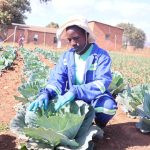

Zimbabwe’s smallholder farmers have the capacity to produce enough food to feed the nation if they are supported with access to finance, markets and skills development, stakeholders have said.
Speaking during the signing of a Memorandum of Understanding between the United Nations World Food Programme (WFP) and the Zimbabwe Mercantile Exchange (ZMX), ZMX chief executive officer Collen Tapfumaneyi highlighted the importance of creating opportunities for millions of farmers to participate in formal agricultural markets.
He noted that Zimbabwe’s millions of smallholder farmers represent a major opportunity for national food security.
“If each one of them has the capacity to produce one tonne of maize, that will mean millions of tonnes per harvest. Our farmers have capacity to feed the nation fully,” he said
Giving her address, WFP Zimbabwe Representative and Country Director Barbara Clemens said the partnership marked a significant milestone towards building stronger food systems anchored on functional markets and resilient institutions.
She said, “achieving sustainable food security requires more than increasing agricultural production, but also strengthening markets, institutions and partnerships that connect farmers, businesses, government and communities to create lasting economic opportunities. She noted that many farmers continue to face barriers such as limited access to reliable markets, transparent pricing, financing and solutions to reduce post-harvest losses.”
She also said WFP’s collaboration with the Zimbabwe Mercantile Exchange would help establish more structured and efficient agricultural markets while strengthening local capacities and supporting Government efforts to develop resilient rural economies, including through Village Business Units.
The partnership is expected to strengthen agricultural market systems, improve farmers’ access to markets and contribute towards building more resilient food systems.
The new five-year partnership between WFP and ZMX is expected to positively impact millions of people, including farmers and households that depend on agriculture for their livelihoods.
The collaboration comes at a time when climate change continues to place pressure on agricultural production through changing rainfall patterns, droughts and increasing food insecurity risks.
By strengthening market linkages and supporting smallholder farmers, the two stakeholders say Zimbabwe can move closer towards a more inclusive and sustainable agricultural sector.