

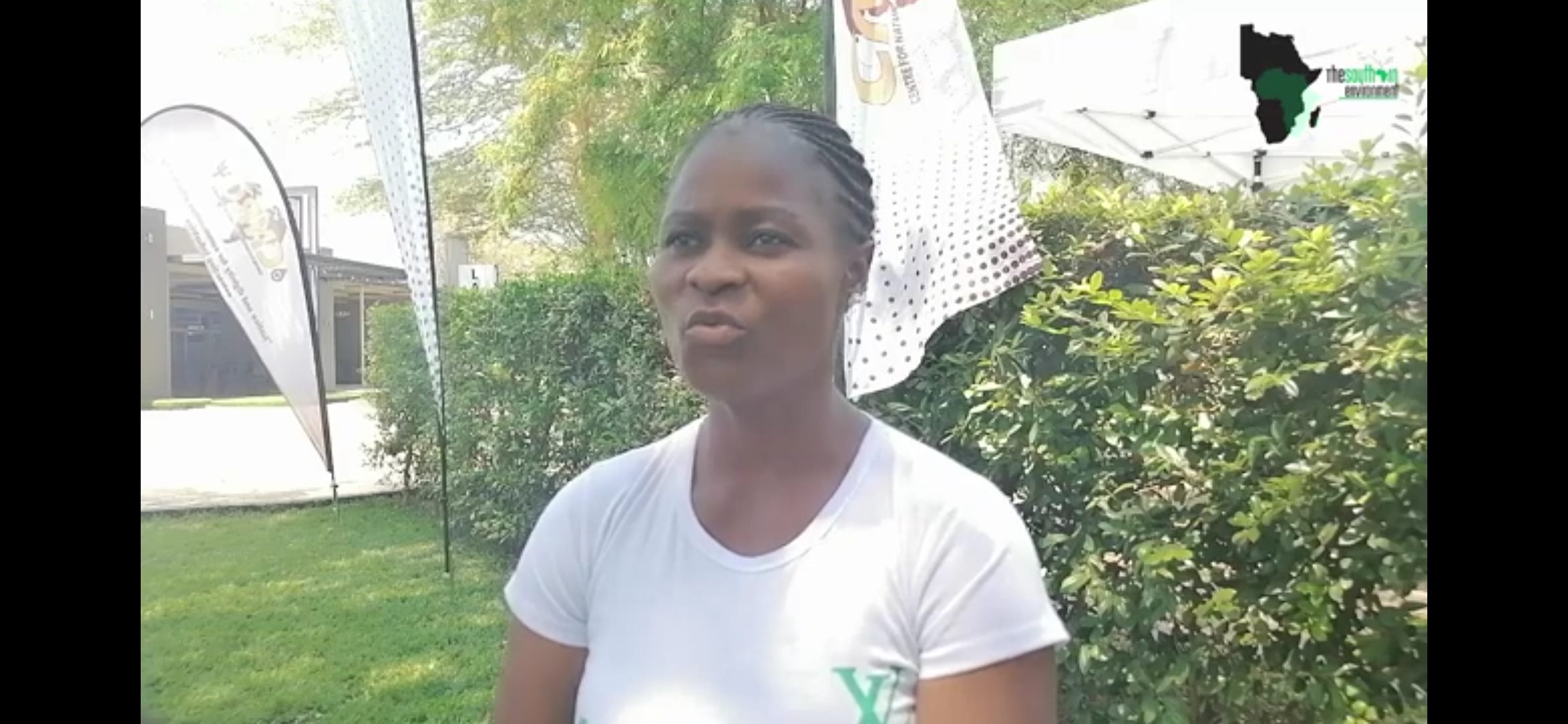
Tears came before the words. They gather quietly in the corners of Takemore Mupfuya’s eyes as she tries to steady her voice, then fall one by one down her cheeks, slow, heavy drops that carry the weight of memories she has tried, and failed, to bury.
Sitting quietly on a bench, twicking her eyes trying to hold back the tears. I had invited her for an interview to balance my story after I had attended an event in Harare organized by Center for Natural Resource Governance (CNRG) duped ‘The People’s COP’.
She clasped her hands together tightly, as though holding on to the only things she can still control. “My name is Takemore…Takemore Mupfuya…” she said, looking away trying to avoid eye contact with me for me not to see her wet eyes. “I still see them,” she whispers, her voice breaking.
“My husband… my baby. The water just took them. I don’t even know where they are.”Six years after Cyclone Idai tore through Chimanimani in March 2019, Takemore still wakes to nightmares of rushing water and frantic cries.
She was left with two children, both now teenagers, while the storm swallowed her husband and last-born child without a trace. No grave. No body. No closure. Only memories that torment her at night and a silence that becomes heavier with each passing year.
Takemore recalls the night with a mixture of disbelief and pain. Rain hammered the roof like fists. The earth trembled. Then the mud and water came furious, unstoppable.
“I still don’t know how the water got to us, I heard strong sounds, then screems and the time I woke up I was somewhere I could not remember the place, the water had washed me away, my home was now a ground. I guess the ground had opened and they were gone, my husband and child,” she said.
Her church Anglican, touched by her loss, came together to help rebuild her life. They helped her construct a simple two-room house, modest, but a refuge from the trauma she carries.
She showed me pictures of her home which she build just few steps from where her old house was, she said she doesn’t want to go away with the hope that one day her husband and child will be found and come back home. Inside, a bible rests on a small table next to a plastic chair.
On the wall hangs a faded photo of her husband holding the baby they both adored. “This home is a blessing,” she says. “But the emptiness inside it, inside me, it never leaves.”
While Takemore now has a roof over her head, many survivors in Chimanimani do not share this small comfort. According to the Centre for Natural Resource Governance (CNRG) director, Farai Maguwu, some families displaced by Cyclone Idai still live in tents, their lives paused in the aftermath of the storm.
The temporary structures, meant to shelter people for weeks, have become their only homes for years, leaking when it rains, baking under harsh heat, offering little dignity or privacy.“People were promised relocation and permanent housing,” Maguwu notes. “But the reality on the ground is painful. Some survivors are still in tents, still traumatised, still struggling to rebuild the lives Idai took away.”
“So this is what we are trying to do with The People’s COP, we bring people from different communities because they are always left out on global forums yet they are the real people who bear the brunt of climate change,” said Maguwu.
In communities such as Ngangu and Kopa, the sight of worn-out tents clinging to muddy slopes is a haunting reminder that the disaster never truly ended.
Children born after Idai have grown up knowing no other home. Families live with constant fear every rainstorm brings back the terror of that night.
For Mupfuya, everytime when rain season starts it is trauma. “Everytime the rain season come I don’t sleep at night, the fear of loosing these two boys I’m left with hurts a lot.
I may look fine but inside I’m still running from that water,” she said. Local leaders and humanitarian organisations continue to push for government action, urging authorities to speed up relocation, rebuild livelihoods, and offer psychological support. But years later, promises remain largely unfulfilled.
Mupfuya blames it on misinformation and disinformation. She said the mediums failed her community after I asked why they did not vacate when the cyclone was announced .
“Yes we were told that there going to be a ‘heavy rain’ and we even prepared for a bumper harvest but did not know it was going to be this heavy. No enough information reached us.”