



Republishing
The Hwange community is bearing the brunt of the continued use of coal as a form of energy amid rising air pollution and respiratory diseases in several villages close to mining areas.
Mining companies are stampeding to extract coal in Hwange, but an investigation by The Southern Environment with support from the Voluntary Media Council Zimbabwe (VMCZ) and (Friedrich Naumann Foundation) FNF has revealed that villagers have been left to deal with the devastating effects of the resource’s exploitation.
The burning coal increases air pollution, while producing a strong smell that lingers in the air.Coal also ejects carbon dioxide into the atmosphere causing global warming which results in climate change.
A visit to Madumabisa village, revealed that the community is inhaling heavily polluted air released by burning fossils, which also produce a pungent smell that lingers for hours on end.Many villagers have flu-like symptoms and pneumoconiosis.
The pneumoconiosis are a group of interstitial lung diseases caused by the inhalation of certain dusts and the lung tissue’s reaction to the dust.
This reporter suffered nostril and throat irritations, headache, dizziness, confusion and breathing difficulties after three hours of walking in the village.
The initial plan was not to spend much time in the village, but for the sake of the story I had to stay. A large number of villagers had flu-like symptoms, which they said had persisted over a long time. Most had however not sought medical attention due to economic hardships.
“The doctors need money but we cannot afford it. We do not have government hospitals here; we have private clinics and they cost a fortune.
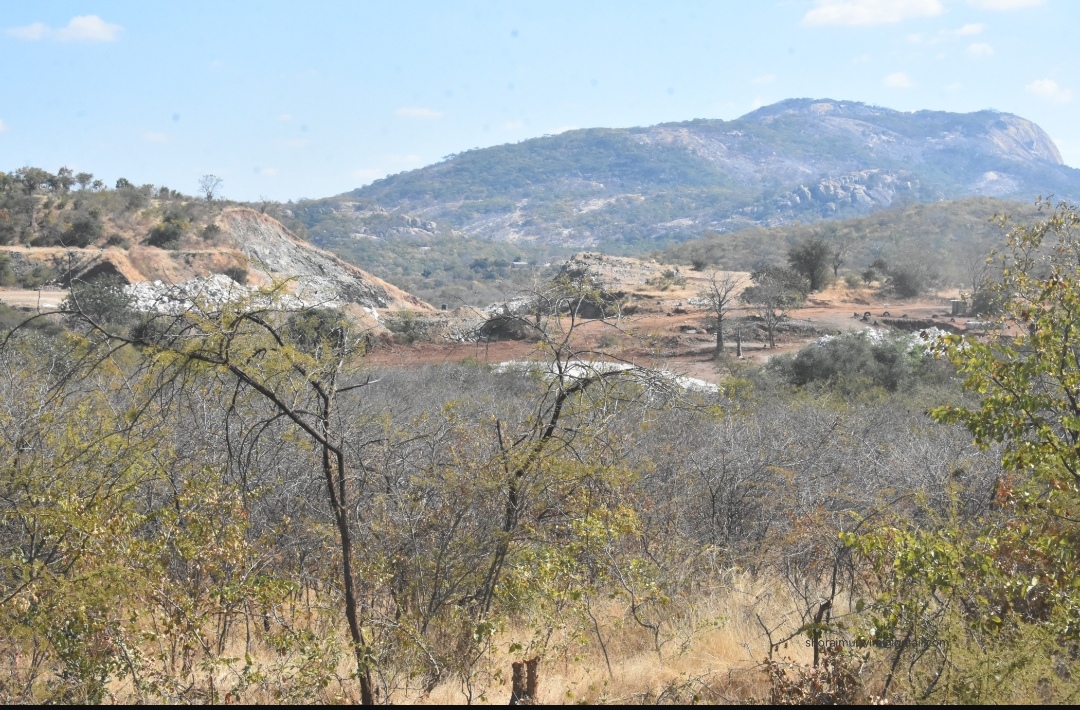
We are opting for steaming to treat this flue but it never ends,” says Petronella Moyo, a villager.Madumabisa village number2 and coke hills just behind the housesMadumabisa Number Two Village was a compound built for Hwange Colliery Mine workers soon after it was founded in 1895.
It was called ‘Wankie Coal Field’ at the time. However, families moved in to stay at the compound resulting in the population expanding. Many Madumabisa are suffering from respiratory diseases.
This reporter found a medical document of one of the HCCL workers. He was diagnosed in 2020, but refused to be named and to talk because he was scared of being victimised.
According to the Pneumoconiosis Act, only HCCL workers get treated and tested regularly. The colliery dumps coke waste a few metres from the houses, creating artificial hills that produce dust which is a health hazard.
Coke is a grey, hard, and coal-based fuel with a high carbon content. It is made through heating coal in the absence of airSome villagers are making a living through selling that coke which they find in the dumps. They pack it in huge bags and get paid USD$3 per bag. Some sell it on the black market.Greater Hwange Resident Trust coordinator and an environmentalist, Fidelis Chima says many people in the community are suffering from chronic diseases because of the pollution.He said HCCL only takes care of its employees leaving out the rest of the community which is also affected by the air pollution.
An artificial hill formed out of coke dumped few metres away from Madumabisa village. Most of the women, who forage for coke, do so without masks, risking their health.
Chima said six women choked to death in the coke hills.Sekani Mathe, a 37-year-old woman and one of the victims was buried alive while foraging for coke to sell together with her friend in Madumabisa village in may 2021.
Chima said as a result of movement in the waste, she was buried by the piles.Excavators were brought to the scene, but when the pile was removed, she was already dead.“Now we do not have a solution as yet.
As an association, we approached the colliery and their justification is that this is not supposed to be a residential area for families, but the people have created memories and they are refusing to go.
“We have a record of about six women who were swallowed by coke hills and they choked to death while they were packing it into sacks which they get paid for. A worker, Tobis Siziba(not real) at a Chinese company , South Mining Company, said employees were working in unsafe conditions.
“We do not have protective clothing, we are only given gumboots, and helmets but not dust masks. We risk our lives every day because we want money to feed our families.
Our bosses do not want this to be reported anywhere,” he said.“Even if you get hurt, the story is not allowed to be told anywhere. It ends there. We do not have medical aid cover; we get sick every day because the gases are too strong. Only bosses wear dust masks.”South Mining company administrator, Charles Mubaiwa was called for a comment and an email was sent, but he did not respond.
Siziba also said that they drink water which has been contaminated underground by the fossil fuel.According to the International Energy Forum (IEG), https://www.iea.org/energy-system/fossil-fuels/coal, coal is the most carbon intensive fossil fuel, and the residents have been proposing phasing it out.
More than 40 countries at the 2021 COP26 Glasgow in Scotland also made the proposal.Phasing out coal is now considered a key step in reducing emissions.
This will limit global warming by 1.5 degrees Celsius and avoid the worst climate impacts, as enshrined in the Paris Agreement.
A new ActionAid report released at the onset of the 2023 Africa Climate Summit, reveals that 11 international banks from Europe and three from the Americas and Asia pump money into projects that harm the climate.
These projects include coal, oil, and gas, and industrial farming.The banks give 20 times more funding to harmful projects compared to climate-friendly solutions in Africa.
Some of the banks mentioned in the report are HSBC, Citigroup, and JP Morgan Chase. Since 2015, the banks have given US$3.2 trillion to projects that strangle the environment.The report adds that the continued burning of fossil fuels and changing land use are causing climate change.
These banks gave US$370 billion to industrial farming, which is a big source of greenhouse gases. ActionAid International wants banks to stop financing projects that damage the environment and to pay more attention to the harm they are causing. The report also calls on governments to make rules for banks and industries to stop harming the climate.
They say that human rights should be considered, and local communities should have a say in projects.
Water and SanitationOn the frontline of climate change, clean water, decent toilets and good hygiene are essential for communities affected by climate change. A ranking by WaterAid of development countries shows where millions of people are already losing their right to water, increasing vulnerability to climate change.Hwange is one such community.
WaterAid Chief Executive Tim Wainwright said: “The world’s poorest countries will be most impacted by climate change, while they have done the least to cause carbon emissions.
Helping those countries to adapt to these challenges has been neglected, putting millions of people’s lives at risk.”A public toilet which has been blocked due to no running water For the Madumabisa community, it has been a while since they had water on their taps.
Siziba said there is only one public working toilet for the whole community and it gets cleaned once a week because there is no water.
A pipe which the villagers illegally connected from and underground pipe to have water“We no longer use toilets since there is no water to flush.
So, if you decide to go there you will see it is filled with waste. It is unhealthy for us and we no longer allow children to use it because they are not as careful as adults. We now opt for the bush.
“There is no running water here and we rely only on one pipe which, however , bursts. We had to insert another external pipe so that we may drain water from there, that is where we also get drinking water, but it is unhealthy as well,” he said.He said he hoped their plight would reach the right ears.“I am lucky because close to my house there is a pipe which leaks water, although it is dirty but I can fetch it anytime.
We can even drink it, we just need to put it in a bucket and make it settle, then it is clean,” Moyo said.
The whole village is surviving from a pipe which they illegally connected to an underground pipe, leading to HCCL.When the water is not opened from the main switch, they resort to muddy puddles, from pipe leaks.
The villagers accuse HCCL for the burst pipes which they say is as a result of maintenance failure and mismanagement.HCCL cooperate manager Beauty Mutombe requested for an email when asked to comment. The email was sent on 18 September 2023 and directed to cooperate affairs of the HCCL. Mutombe did not respond until the publication of this article. Underground fires and hot temperaturesLincoln Tomu’s legs recovering from the fire burnsUnderground fires have also been a serious threat to people in Madumabisa.
Many children, mostly under 10, have been burnt by underground fires in the vicinity of the village.Chima said if the coal is exposed to oxygen, it ignites and burns underground.
Victims only find out that the ground is burning after stepping on it.Residents fear the fires will spread into the village.Seven-year-old Lincoln Tomu, was burnt while playing with other children close to home.
A close relative, who refused to be named, blamed HCCL for the raging fires.“They never came in to assist with medical bills. The only thing they did was to put up warning signs, but it is not enough and I asked them if the signs are enough for children because they cannot read. Can these young children read?” she queried.
Memory, a 25-year-old mother, had to move her child to Lupane to stay with her mother after he was burnt.“I had to move him to stay with my mother in Lupane because it is no longer safe here for him. He got burnt and I had no one to help me with the hospital bills since I do not have a husband to assist me,” she said.
“They were playing just few metres away from home, because I had warned him not to go to the bushes, but as he was playing, I heard noises of other children shouting then I ran to them but since we have no running tap water here, some women had to help me and we washed my child using the water from a burst pipe.”
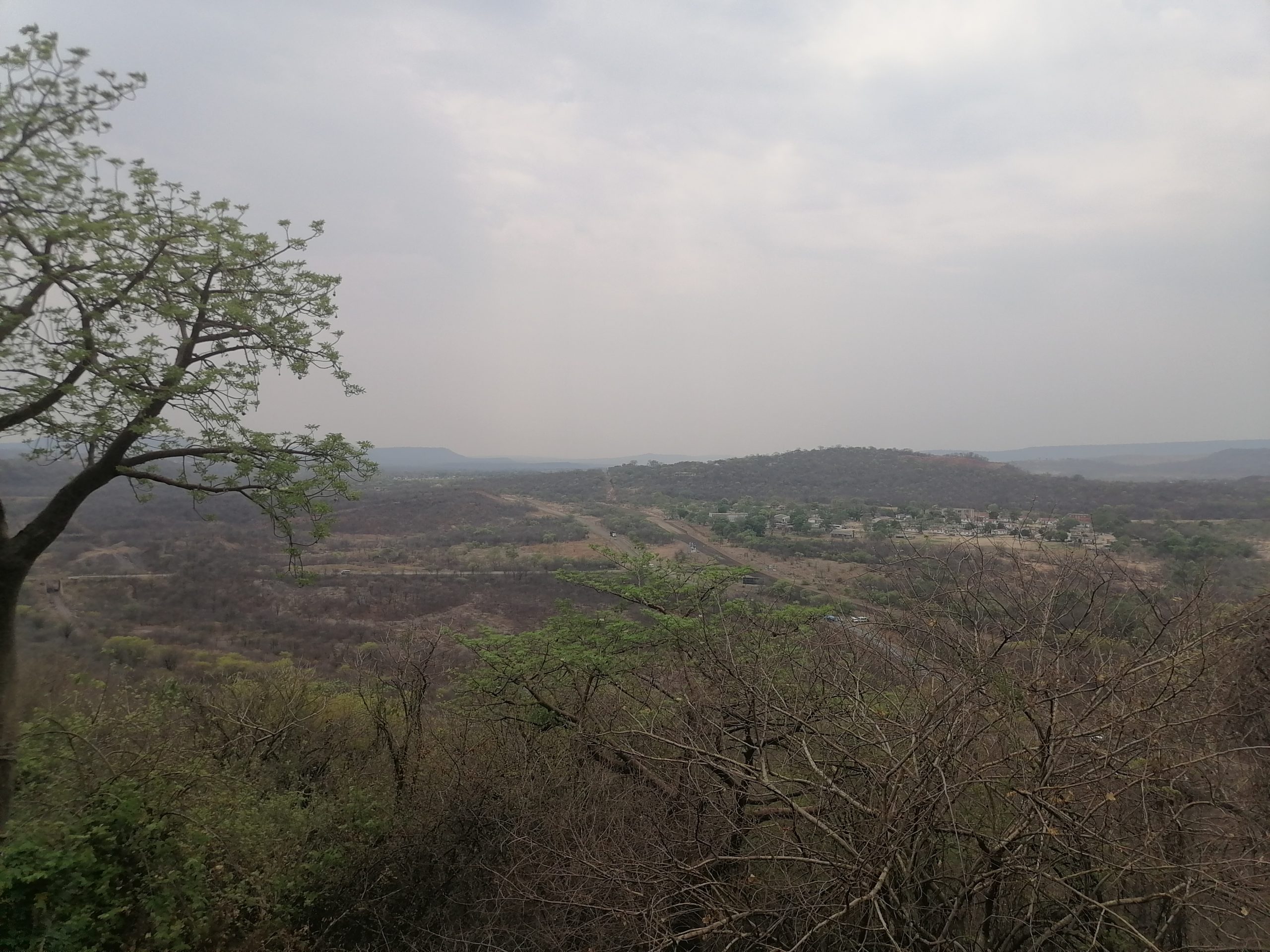
Hwange has a population of about 40,000 people, most of whom are living in fear, because the company has failed to fence off coal sites and take measures to extinguish the fires.
The use of coal has contributed to climate change due to the increase in emission of greenhouse gases when burnt to coke or fuelling power stations. In the last three years, the town has witnessed flash floods and heat waves.
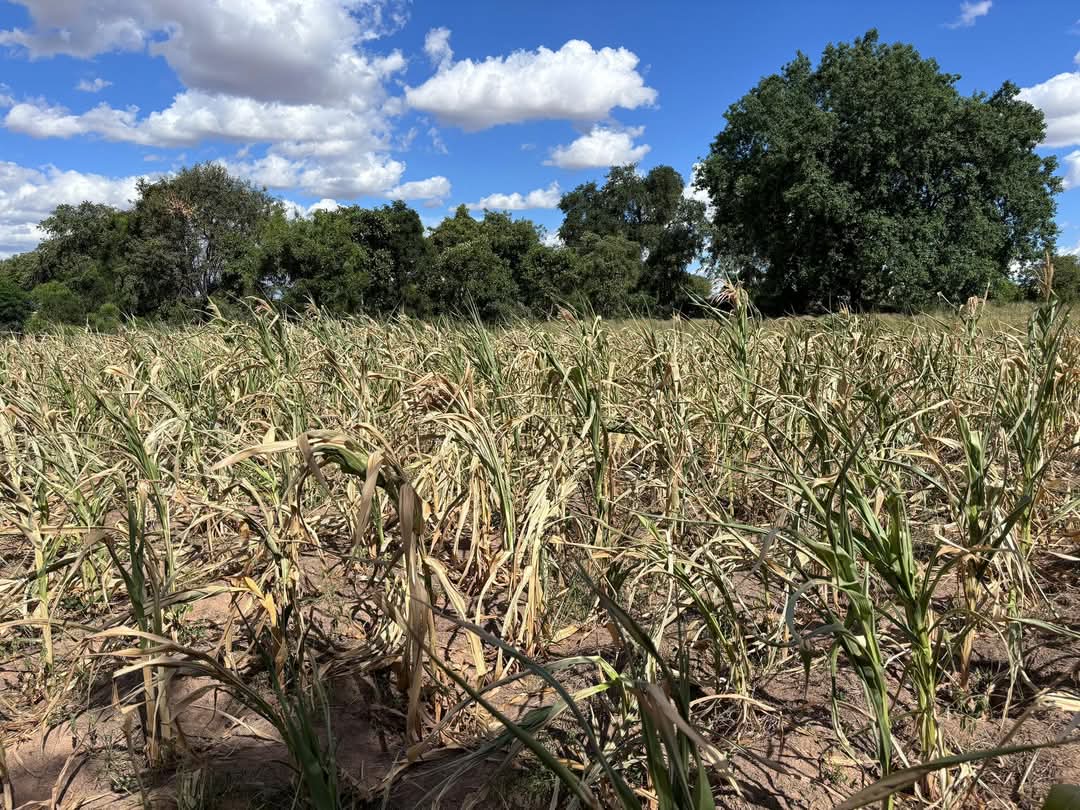
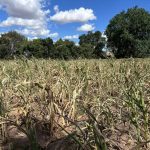
Hwange is under agro-ecological region four. The region used to receive an average rainfall of 450mm to 600mm per year during the 1980s but that has changed due to climate change and global warming. (what are the rainfall patterns now)Seasonal dry spells are however rife in the region.
According to the Hwange Sanyati Biodiversity Corridor (HSBC) Project Environment and Social Management Framework which the government of Zimbabwe is implementing together with the Global Environmental Fund (GEF), seasonal droughts are also characteristic of this region due to the impact of the Botswana Upper High (BUH) from the Kalahari Desert.
Rain received in this region is mainly conventional since it comes as a result of the southern frontier of the Inter-Tropical Convergence Zone (ITCZ).Temperatures have significantly increased over time in Hwange with heat waves being recorded since the 1990s.
According to the Meteorological Department, Hwange receives on a daily basis an average maximum temperature of 34.19˚C, minimum temperature of 33.96˚C.
The high temperatures have often resulted in heat waves and heat stress in the region. The temperatures soar higher during the summer accompanied with steady winds, but sweltering effects. Worldwide severe heat waves have caused catastrophic crop failures, thousands of deaths from hyperthermia, and widespread power outages due to increased use of air conditioning.On December 24 2021, the Hwange Colliery Company Limited (HCCL) issued a press statement on underground fires.
The company said it was alive to the underground fires in its concessions. The company said it would continue with awareness campaigns in schools and communities. “Temporary measures such as road diversions to Number 3 village, barricading as well as placement of signage at the affected areas will be taken.
In addition, HCCL has invested in a drone that has a thermal camera for security purposes and identification of underground fires. As part of a long-term plan, Hwange Colliery engaged a German based specialist company to assist in the necessary interventions.
DTM is the only company which offered its services for managing the fires using modern and cost-effective methods among other companies which HCCL consulted,” said HCCL in a statement. An environmental watchdog, Centre for Natural Resources Governance (CNRG) in its 2017 independent Environmental Impact Assessment (EIA) report noted that trees and plants are dying because of the underground heat emanating from coal burial, whilst mining-induced subsidence without adequate prevention or repair measures, often results in the abrupt sinking of the ground surface, destroying the ecosystem, roads and killing both humans and animals.
Chima said underground and surface fires have killed at least eleven children since 2020 and injured more than a dozen people. He accused the company of not taking the threat seriously and fears that the fires are spreading to where the people are staying now.
This reporter witnessed traces of fire and the burnt ground just a stone throwing away from the residents. “Hwange Colliery Company appears incapacitated to decisively deal with underground fires. It’s sad that Hwange Colliery makes it difficult to be accountable for residents who reside in the concession area, as it has a tendency of evicting people who seek to make it accountable,” “Now the whole village is under siege because we cannot tell where the fire will erupt. It is all scary,” Chima said.
He added that the biggest challenge is that coal is being dumped close to where people stay and if it becomes exposed to oxygen it then creates fire. “This seems like the whole village is sitting on a bomb waiting to explode.
They have created a mining shaft underground and the rains are near. We fear the worst because these fires worsen during the rainy season.With the help of an aide, this reporter visited some of the fire hole places where the villagers say they always see flames, during the nights.
As scared as I was, I could also hear my aide painting as we were walking. I did a short prayer.At the beginning of the journey, I was excited to go and witness the “fire coming out of the ground” but as we were halfway our journey, I noticed white-like stuff which looked like ashes on the ground.
I then knew I was risking my life, so I started praying for divine intervention.We walked for a few more metres and stood at a point where we both agreed that we need to stop, no story is worth dying for.
My feet were feeling extremely hot and so did my aide’s. We were very close to where the flames were seen during the nights. He pointed to me where there was red soil. It looked like it was cooked in a hot fire, the soil there is dark and sandy, but when burnt it turns red.
The red soil was flowing. It looked like a volcano had just erupted. I recorded and we left.
Temperatures in Hwange are very high, but with the changes in the atmosphere, it has become extremely hot that the fires are partially caused by the hot wind blowing day and night.