





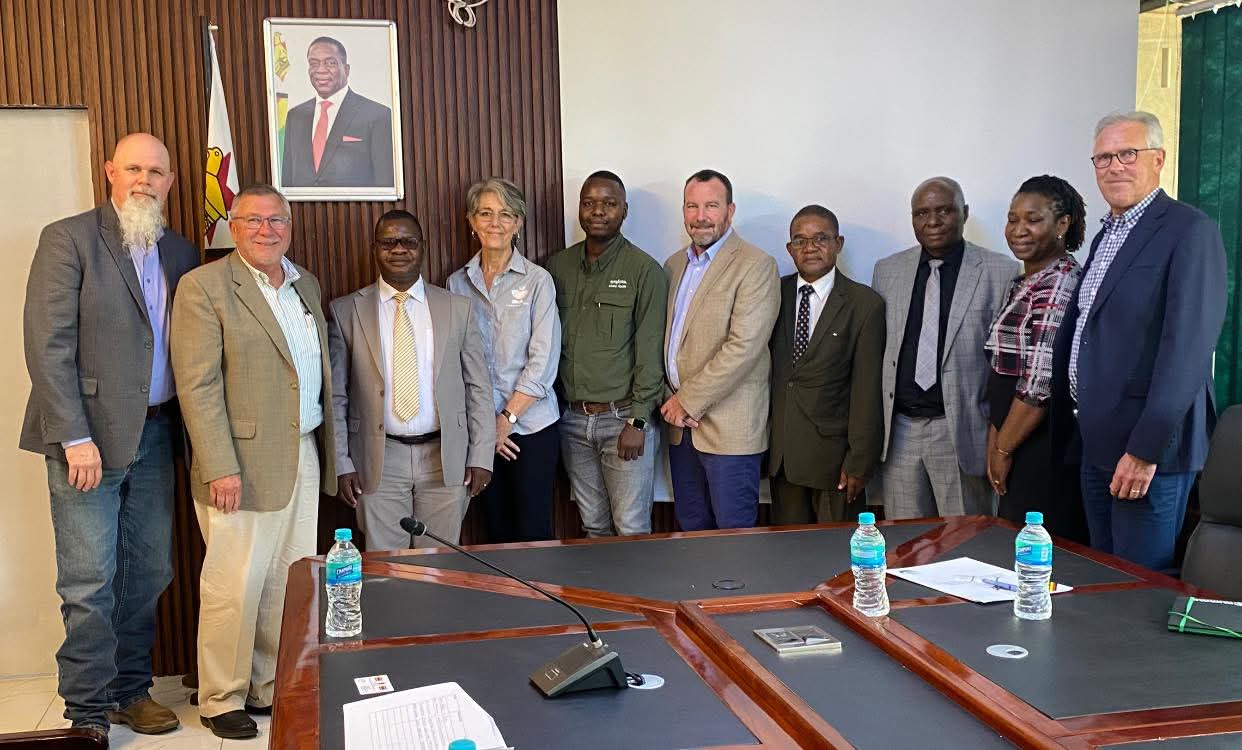
The Permanent Secretary of the Ministry of Lands, Agriculture, Fisheries, Water, and Rural Development, Professor Obert Jiri hosted potential investors from Klein Karoo Seed Production (KKSP) and Syngenta on Wednesday 4 February 2026.
The visit highlighted that Zimbabwe has been specifically targeted by global industry leaders for its immense agronomic potential.
The discussions focused on establishing Zimbabwe as a primary country of origin for global seed supply, leveraging our world-class climate and unique “shoulder season” window, which allows the nation to supply global markets during critical periods when other regions cannot.
Welcoming the delegation, Prof Jiri underscored the country’s natural and structural advantages, stating. “_You need not worry about the climate; Zimbabwe possesses the finest environment for the production of any crop you desire. We are already witnessing a boom in the blueberry industry as a direct result of our superior climate, which yields exceptional quality and size.
Our unique conditions allow us to enter global markets earlier and stay later than most competitors, providing us with a significant ‘shoulder season’ advantage.
Beyond our favorable climate, Zimbabwe also boasts one of the best and most robust seed systems in Africa, providing a solid foundation for any agricultural venture. You are certainly in the right place, ” he said.
A key highlight of the visit was the potential for these global industry leaders to support Zimbabwe’s Rural Development 8.0 initiatives like ministry’s Village Business Unit (VBU) model, which has already established over 1,400 operational units, stands to benefit from access to high-quality vegetable genetics and advanced technical expertise.
By exploring local production of specialized seeds for alliums, carrots, and brassicas, Zimbabwe aims to enhance rural industrialization, ensuring that every village horticulture business unit is equipped with the best inputs to drive productivity and household income.
Beyond local impact, the meeting looked toward the global horizon, noting growing inquiries for Zimbabwean produce from the Middle East and beyond.
As the Directorate of Research continues to evaluate the technical requirements for such a partnership, the Ministry remains committed to providing a “soft landing” for investors who recognize Zimbabwe’s strategic value.
This visit underscores the national goal of moving from a net importer to a leading exporter of high-value horticultural products, reinforcing the immense confidence global stakeholders have in Zimbabwe’s agricultural future.