



At least three people have died in and around Cape Town after powerful winds and heavy rains battered parts of South Africa’s Western Cape Province, leaving a trail of destruction, flooded informal settlements and widespread infrastructure damage.
Authorities said the deaths were linked to falling trees and drowning incidents as severe weather swept across the region earlier this week.
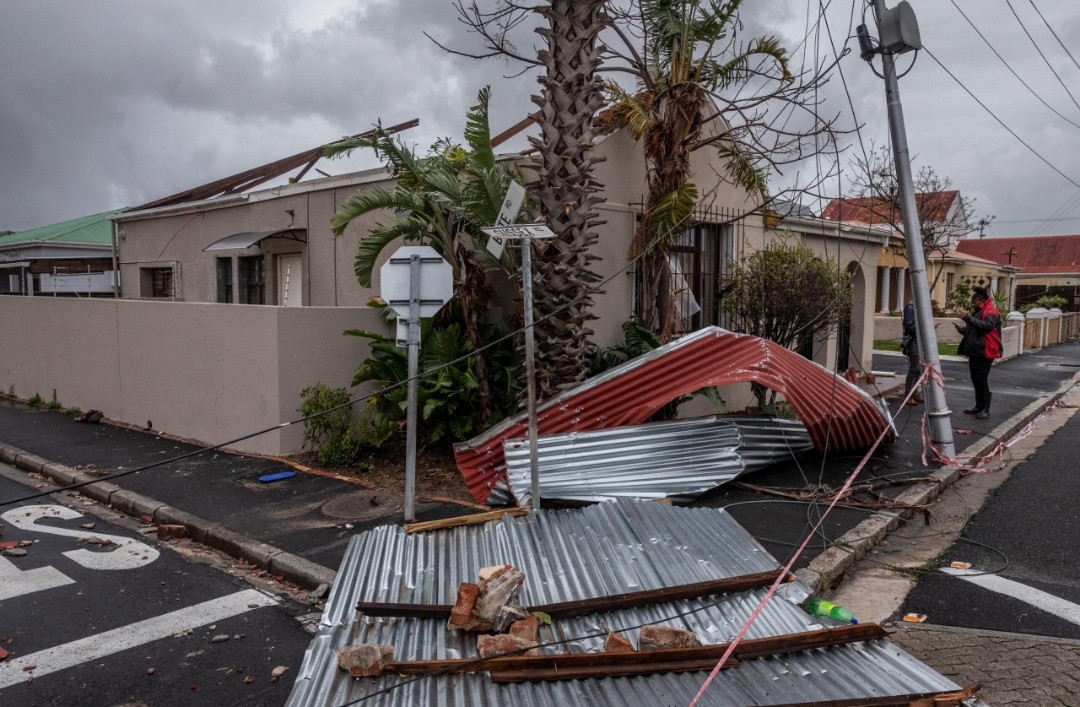
The violent storm system brought gale-force winds exceeding 100km/h in some areas, ripping roofs off houses, uprooting trees, damaging roads and disrupting electricity supply across communities in the Cape Town metro, the Cape Winelands, Overberg and the Garden Route districts.
The Western Cape Provincial Disaster Management Centre confirmed that “emergency services were overwhelmed with hundreds of calls for assistance as flooding submerged roads and informal settlements in areas including Khayelitsha, Gugulethu, Delft and Philippi.”
One person reportedly died after a tree fell onto a vehicle in Kenilworth, while other fatalities were linked to drowning incidents during attempts to cross rivers swollen by heavy rainfall.
Thousands of residents living in informal settlements were among the hardest hit. Homes were flooded, furniture destroyed and families displaced as water swept through densely populated communities with poor drainage systems.
The storm also forced the closure of schools across the Western Cape as authorities warned of another cold front expected to bring additional rainfall and dangerous sea conditions.
The South African government has since classified the severe weather affecting multiple provinces as a national disaster, enabling emergency funding and disaster response measures.
Environmental experts say, “the increasing frequency and intensity of storms, floods and extreme rainfall events in Southern Africa are linked to climate change.”
The region has experienced repeated climate shocks in recent years, including devastating floods in Mozambique, Zimbabwe and South Africa.
For many vulnerable communities, particularly those living in informal settlements, the disaster highlights the growing intersection between climate change, inequality and urban planning challenges.
Residents in affected areas described terrifying scenes as roofs collapsed, roads disappeared under floodwaters and strong winds tore through neighbourhoods overnight.
Disaster response teams are said to remain on high alert as weather warnings continue across the province.