






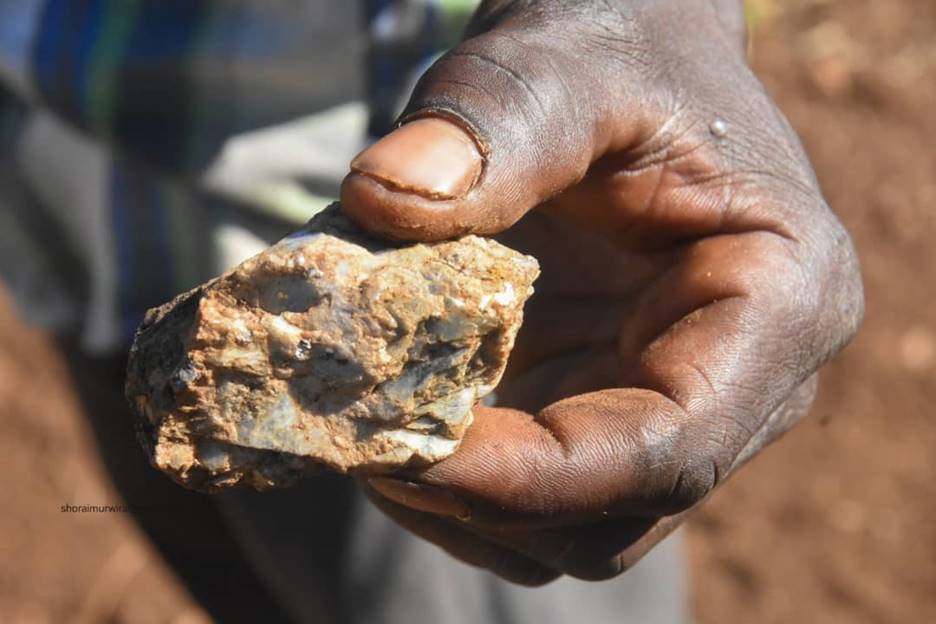
The road into Bikita announces itself long before the signpost does.
Dust rises in thick, restless clouds, hanging in the sky like a warning. Heavy trucks thunder past in an endless rhythm up and down, carrying the weight of Zimbabwe’s lithium boom.
The deeper you go, the more the dust clings, to your skin, your clothes, your throat. It settles into everything. It does not leave.
A narrow path branches off the main road into Murape Village, where the noise softens but never disappears. Here, the land tells a more intimate story one of proximity, of encroachment, of lives unfolding too close to extraction.
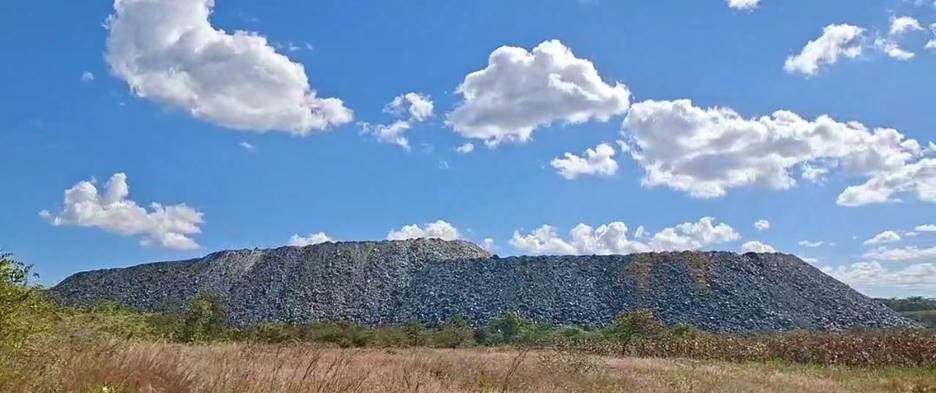
At one homestead, the boundary between village and mine has all but vanished. Behind a small house, just a few metres from the back wall, rises a growing mountain of stones, mining waste dumped daily from operations at Bikita Minerals. The heap towers over the yard, uneven and unstable, shifting with each new load tipped from passing trucks.
The woman, Stembiso Share who lives here stands quietly, watching.
“I see them every day. They keep bringing more,” she says.
At night, her fear grows louder than the trucks.
“One day, this will fall on my house,” she says, her eyes fixed on the looming pile. “I might be buried while I am sleeping.”
She pauses, then adds softly, “But I have nowhere else to go. Some people whose houses were swallowed by the slime dam close by moved to some other villages, but I have no money to buy another land or start afresh.”
In Murape, danger does not arrive all at once. It builds slowly, steadily like the stones behind her home.
For others in the village, it came faster. They remember the night the slime appeared. It did not knock or warn. It crept.
“Our neighbors woke up surrounded by it,” recalls one villager Shyline Chifire. “It was everywhere flowing into homes and they had to evacuate without a choice, but we stayed because we were a bit far away, not knowing we will bear all the brunt of it later.” She said adding that there is strong smell which comes from the dam causing flue like symptoms.
The substance, described by villagers as thick, grey waste from lithium processing, is alleged to have dumped there without giving a warning to people living in the area, seeping into homesteads and contaminating the environment. By morning, the village had changed.
Paths were swallowed. Yards coated. Water sources once trusted for generations were suddenly feared.
Today, those sources are either buried beneath debris or believed to be polluted. With few alternatives, some residents say they have been forced to rely on water collecting near a slime dam which is believed to be leaking from the slime dam and filtered by sand.
“We have no choice,” says Chifire. “But when we bathe, our bodies itch. Even our clothes are damaged they tear quickly.”
The water sustains life, but at a cost.
Children play near it. Families cook with it. Animals drink it not because it is safe, but because there is nothing else.
Some families left after the slime incident, abandoning homes in search of safer ground. Their departure was sudden, their futures uncertain. Those who remain live with a different burden, the constant anticipation of what might come next.
Within the mining concession, former residents speak of relocation. Some were moved into company-built houses, but say the transition has not restored what was lost.
“The houses are too small and very hot,” Rufaro Nyakadzawo explains. “This is not the life we had. They told us, ‘You need to move because there is money here and we want that money.’”
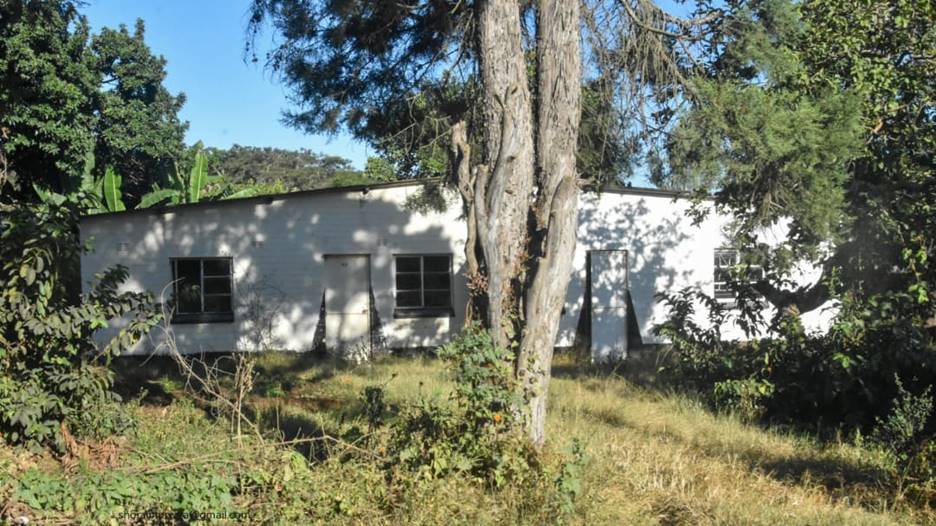
Nyakadzawo and others’ homes were left in destruction, other business building like banks and shops were not spared, all destroyed paving way for mining to happen in peace without people observing. Rumors of further expansion only deepen the unease. Some villagers fear that mining operations could extend into community spaces, including the local school, Bikita minerals school which is inside the mine.
Beyond environmental harm and displacement, residents describe a quieter shift, one that is harder to measure but deeply felt. Freedom.
Paths once walked without thought are now watched. Land once shared has become restricted. One villager, Timothy Macheme recounts being detained for hours after walking near the mine.
“They suspected I was a criminal,” he says. “But this is my home.”
His voice tightens.
“I am no longer free.”
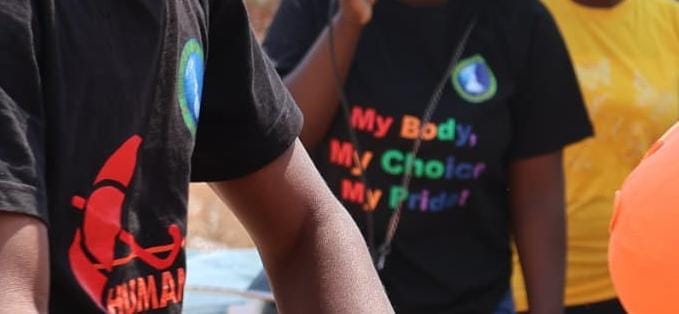
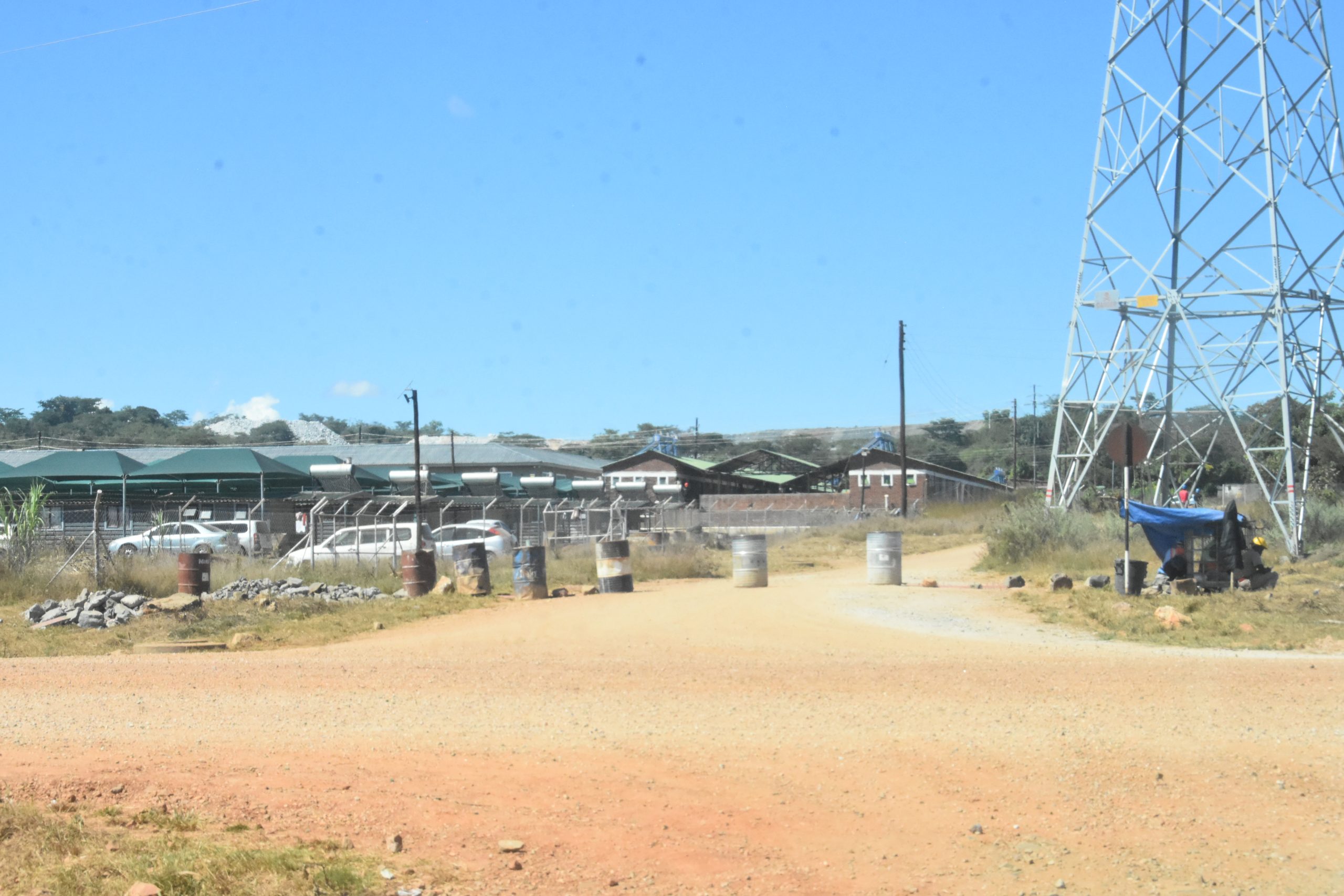
Center for Natural Resource Governance (CNRG) project officer, Tanaka Ndongera says, “Witnessing first-hand the realities at Bikita Minerals from families living within meters of slime dams, to children exposed to contaminated water sources, blocked roads, noise pollution, and a highly securitized environment powerfully reinforced why this project exists, and the urgency with which communities from Bikita, Buhera, and Goromonzi must be supported to build solidarity, share experiences, and speak collectively to those who govern critical mineral extraction in Zimbabwe and the broader SADC region.”
Ndongera said this during a Mine Site Exchange Visit conducted under the Minerals for People and Planet: Building Inclusive Governance of Critical Minerals in the SADC Region, a project which he said was a “significant and timely intervention that brought to life the very essence of community-centred advocacy that CNRG champions.”
He also added that the visit not only deepened participants’ understanding of governance, environmental, and socio-economic dimensions of lithium mining, but meaningfully amplified the voices of women and youth as active agents of change generating critical documentation, testimonies, and a shared set of advocacy priorities that will directly inform CNRG’s ongoing community radio sessions, reports, and accountability engagements under this OSF project.
Zimbabwe’s environmental and mining regulations require companies to protect water sources, manage waste responsibly, and consult communities. But in Murape, villagers say those safeguards feel distant.
Questions linger without answers. Were proper waste systems in place? Has water been tested? On what basis was compensation determined? Were communities fully informed before displacement?
For now, the silence is as present as the dust.
As the sun sets over Murape, the trucks do not stop. The dust does not settle, and inside her house, just metres from the rising heap of waste, Share prepares for another night of listening,waiting for the ground to hold.
“We are living in fear,” she says. “We don’t know what will happen tomorrow.”