


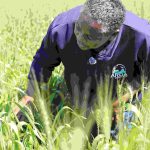
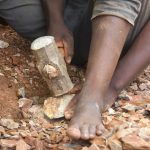
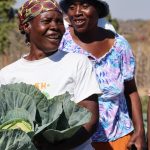
Residents living near Matezva Dam in Bikita, Masvingo Province, are raising concerns over mineral exploration activities taking place in their area, fearing that a possible discovery could bring disruptions to their land, water sources and livelihoods.
As mining companies collect samples to determine the presence of minerals, communities are asking what the future holds if commercial extraction begins and whether mining will become a pathway to development or another source of displacement and environmental degradation.
For generations, the land around Matezva Dam has supported farming, livestock production and household needs, with communities depending on the surrounding environment for their survival.
However, the arrival of exploration activities has created uncertainty among residents who fear losing access to their ancestral land and natural resources if mining operations expand.
“We are not against development or mining, but we want to know what will happen to us if minerals are found. Will we lose our fields? Will our water remain safe? Will our children benefit from these minerals?” said Evalyne Mujakachi, a resident from Bikita.
The concerns come at a time when Zimbabwe is witnessing increased interest in critical minerals, particularly lithium, which has become central to the global transition towards clean energy.
However, communities living near mining areas continue to demand that mineral wealth should not come at the cost of their environment, homes and livelihoods.
Around Matezva Dam, residents say water security remains one of their biggest concerns. The dam is not only a water source but also supports agricultural activities that sustain families in the area.
“Our fear is that when companies see minerals, they only see what is underground. But for us, this land is our life. It gives us water, food and a place to raise our families,” said Gift Mujoma, another community member.
Women in particular could face increased pressure if water sources become affected, as they often carry the responsibility of securing water for households and supporting family livelihoods.
“Mining should not leave communities poorer than before. If minerals are found here, there must be a plan that protects our water, our land and gives local people opportunities,” said Gracious Marime, a local woman farmer.
Center for Natural Resource Governance Communications and Advocacy Officer, Donald Nyarota argued that mining can only become a blessing if communities are meaningfully consulted, environmental safeguards are enforced and benefits reach the people living in mining areas.
“In terms of meaningful consultation, we are saying that meaningful consultation should happen before major decisions are made, and guided by a principle that is called Free, Prior, and Informed Consent, where communities are asked freely, without any coercion or even name-dropping.
“Whenever a project is coming to a community and the community is then told that it is coming from the government officials or what, it means that the community is no longer free to air their own views. And there should be information with regards to the kind of impact, whether economic, social, or environmental that certain projects bring, so that when communities then input in consultations, they are also knowledgeable. And that communities should have a right to say no when they feel that the project will impact them adversely,” said Nyarota.
Previous concerns raised around Bikita’s mining activities have included water use, possible contamination, land access and community participation in decision-making.
The dam is relied on by communities in Bikita and household water, livestock, irrigation and fishing, with one report estimating that it serves about 3,000 families.
Nearby schools and other community services also depend on reliable access to water, making the dam more than a reservoir—it is part of the social and economic lifeline of the area. With Bikita already prone to water scarcity, residents fear that declining water levels or pollution could deepen pressure on households, agriculture, education and other essential services.