


This photo story profiles raw sewage which flows through residential pathways in Kadoma, children play barefoot beside contaminated streams, families rely on buckets, and residents struggle for access to one of the most basic human rights, safe sanitation.
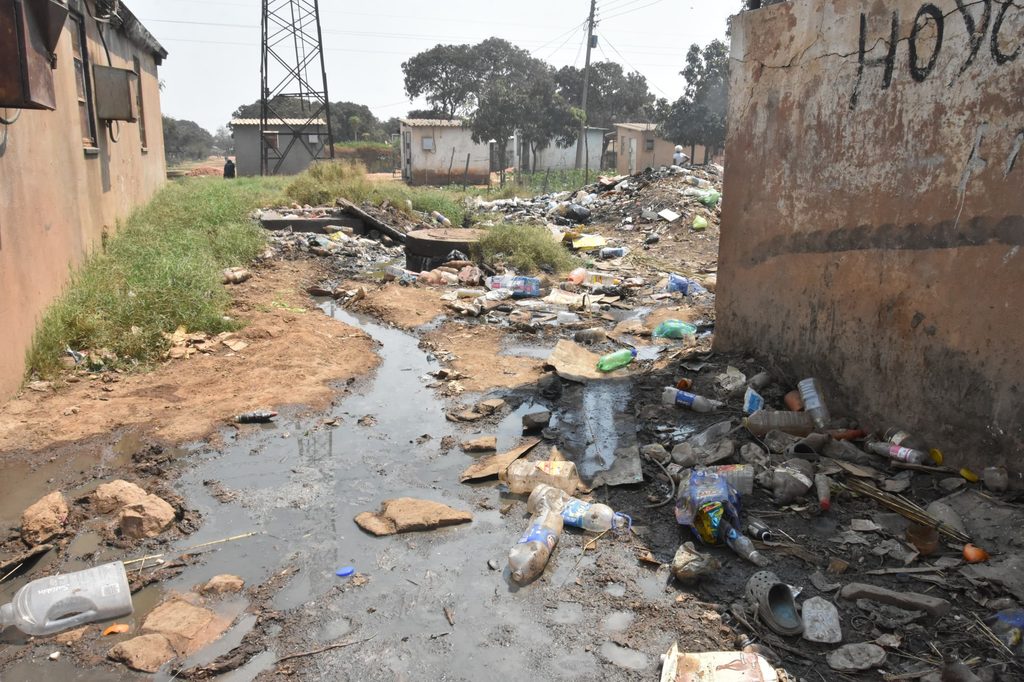
As soon as I stepped into Rimuka Ward 2 in Kadoma, I was welcomed by a smell so strong and unbearable that it was difficult to describe. It hit me instantly, travelling down my throat. For a moment, I tried to fight the urge to vomit, but the stench had already settled in.
My stomach reacted immediately, making uncomfortable sounds as my body struggled to adjust to an environment where residents have been forced to live every day.
My first instinct was to turn back. But I was there to document the reality of thousands of people whose lives have become defined by this sanitation crisis. I took a deep breath, held my camera tighter, and continued walking.
As I navigated deeper into the suburb, I found myself squeezing through narrow pathways surrounded by overcrowded houses, with streams of raw sewage flowing through the community. What shocked me even more was the normality of it all. Young children ran, jumped and played freely beside the sewage streams, barefooted, while others carried snacks in their hands and continued eating as they moved around the contaminated environment.
I stood there wondering about the invisible dangers surrounding these children the health risks, the exposure to disease, and what it means to grow up in a place where sewage has become part of the landscape.
As I continued documenting the community, I met Catherine Katurura walking along one of the narrow pathways. I stopped her and asked what life was like living in an area where accessing a basic human necessity a safe toilet had become such a difficult challenge.
Her response revealed a much deeper story: a community struggling not only with sanitation challenges, but with dignity, poverty and a system that has left many residents with few options.
Catherine did not just answer my questions and walk away. She became my guide through a community that has learned to survive under conditions that many would struggle to imagine. With every step, she revealed another layer of the sanitation crisis facing Rimuka Ward 2.
“Come, I will show you,” she said, leading me through the narrow pathways between houses. Her footsteps were familiar with every corner of the settlement. She knew where the sewage flowed, where residents collected water, and where families had built their lives around a broken sanitation system.
The first stop was one of the few remaining public toilets serving the community. What stood before me was a painful reminder of the scale of the crisis. In an area housing more than 20,000 people, residents say only six toilets remain functional. The demand far exceeds the available facilities, leaving many families with no option but to find alternative ways to manage their daily sanitation needs.
Catherine explained that many households have no toilets of their own. Some families live in single rooms called SQs meaning Sigle Quaters, with six or more people sharing the same limited space. These small structures serve as bedrooms, kitchens and living areas, leaving little room for privacy or dignity.
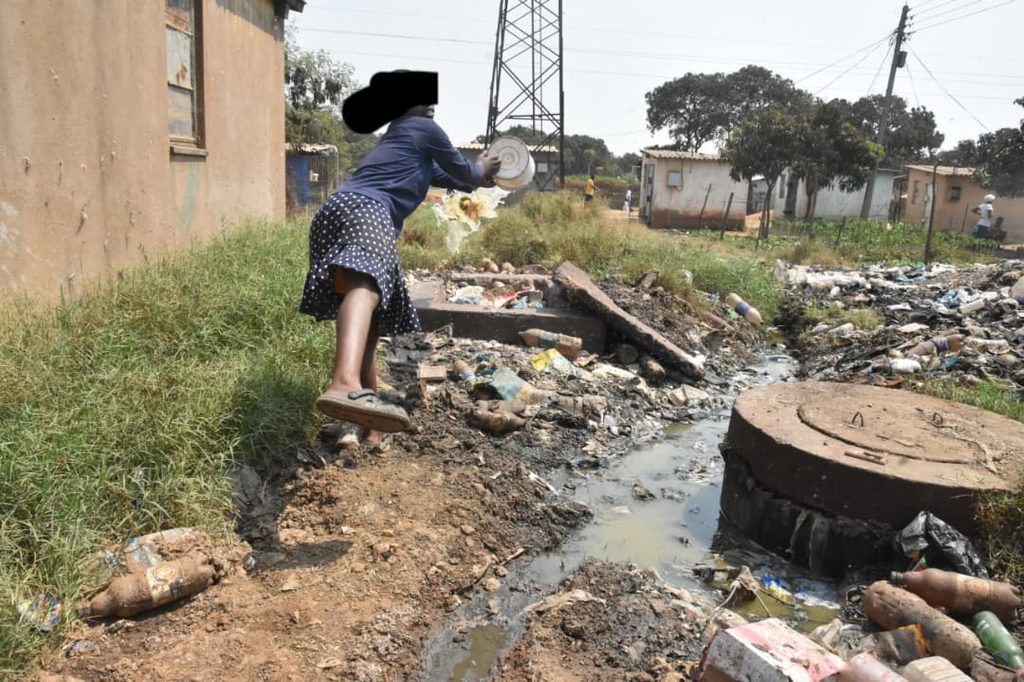
“With no safe sanitation options available, residents have turned to using buckets. After filling up, some families pay young boys from the community to carry away the human waste and dispose of it in a nearby forest. For those who cannot afford the small fee, the waste is sometimes dumped near the entrances of closed toilets, creating another layer of contamination in an already struggling community,” she said.
But the challenges do not end with sanitation. Catherine then took me to some of the water points where residents collect water for their daily needs. The sight was equally concerning. The water sources appeared dirty, raising questions about the safety of the water being used by families for bathing and other household activities.
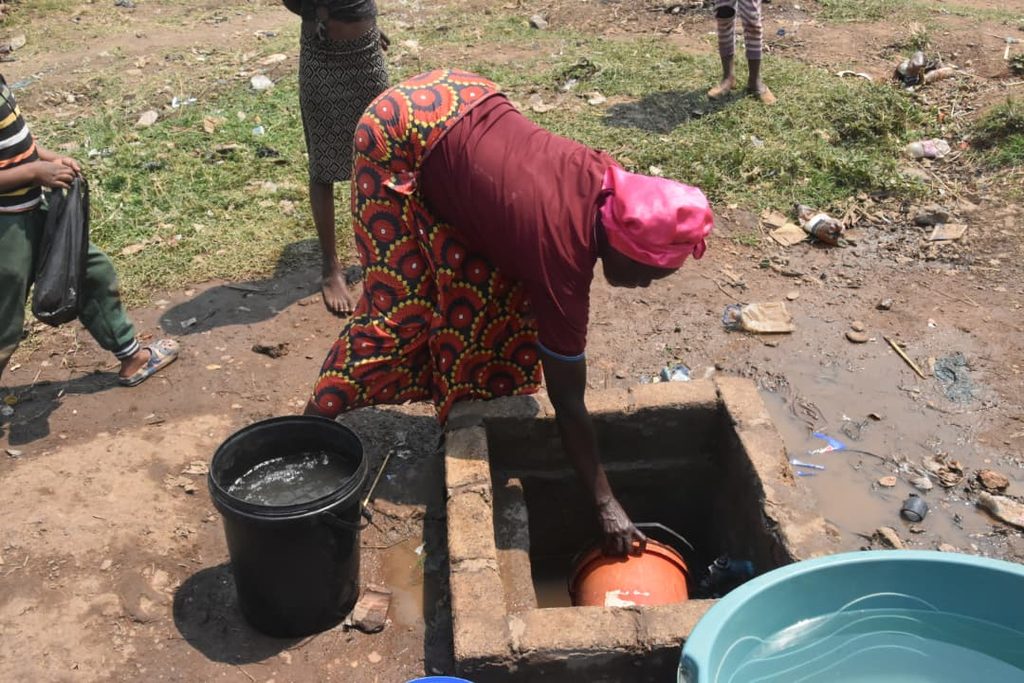
At one of the water points, I met residents who explained how they have developed their own methods to cope with the poor water quality. Some said they use ash to help clean the water before bathing, a practice they have adopted because they have limited alternatives.
For these residents, accessing clean and safe water is not a choice between convenience and comfort, it is a daily struggle. Shyleen Mukundo said, “the water is not ideal, but when there are no reliable alternatives, survival becomes the priority.”
As Catherine continued walking me through Rimuka Ward 2, it became clear that this was not only a story about sewage or broken toilets. It was a story about people forced to adapt to conditions that threaten their health, dignity and basic human rights.
The young boys turning waste disposal into survival
As Catherine continued showing me around Rimuka, she pointed me towards another reality created by the sanitation crisis, a group of young boys who have become part of an informal system of human waste disposal.
When sanitation systems fail, communities often create their own survival mechanisms, here, young boys have found an opportunity in a job most people would never imagine doing.
“For a small fee, these boys collect buckets filled with human waste from households and carry them away for disposal in nearby bush areas. It is work born out of desperation, both from residents who have no safe sanitation options and from young people looking for ways to earn money in a community where opportunities are limited,” Catherene said.
Walking through the settlement, I met some of these young boys who have become part of this unusual sanitation chain. Their daily work exposes them to human waste, strong odour and potential health risks, yet they continue because it provides them with an income.
“I am not trained as a sanitation worker and I do not have protective clothing, proper equipment or safety measures. The tool I have is a simple bucket and my own strength,” said one of the young man I met who commented on conditions of anonymity.
For the families who hire them, the service offers a temporary solution to an impossible situation. For the boys, it is a means of survival.
But behind this informal system lies a bigger question, How does a community reach a point where children and young people must step in to provide basic sanitation services that should be guaranteed through proper infrastructure?
The existence of these waste carriers is not the problem itself, it is a symptom of a much deeper failure. It reflects what happens when communities are left without enough functional toilets, reliable waste management systems and affordable sanitation solutions.
As I watched the boys move through the community carrying waste away from homes, I realised that the sanitation crisis in Rimuka Ward 2 was not only about blocked pipes and overflowing sewage. It was about how poverty and inadequate infrastructure can force people to normalise situations that threaten their health and dignity.
Residents told me that their efforts to improve sanitation at household level have been met with another challenge: outstanding council bills.
According to community members, they have been informed that they must first settle their water and service charge arrears before they can be allowed to construct individual toilets.
For families already struggling to put food on the table, access clean water and survive rising living costs, clearing accumulated bills has become a difficult, if not impossible, task. As a result, many remain trapped in homes without proper sanitation facilities, continuing to rely on unsafe alternatives. “We want to have toilets at our homes, but how can we do that when we are struggling even to pay the bills?” one resident Clever Chishanu explained.
The situation has created a painful contradiction. Residents need functional sanitation to protect their health and dignity, but many say they feel blocked from improving their living conditions because of financial barriers.
Walking through the community, the consequences of this struggle are visible everywhere, sewage flowing through residential areas, families sharing overcrowded living spaces, children exposed to contaminated environments and residents depending on temporary solutions that were never designed to become permanent.
However, residents say they are not asking for special treatment; they are asking for solutions that recognise the reality of life in informal and low-income communities. They want to be part of finding lasting answers, including affordable payment arrangements, improved sanitation infrastructure and meaningful engagement with authorities.For a complete picture of the crisis, Kadoma City Council’s perspective remains critical.
The local authority’s explanation on service delivery challenges, outstanding bills, infrastructure limitations and possible interventions will help provide a balanced understanding of why Rimuka Ward 2 has reached this point.Beyond the statistics and infrastructure reports is a community of people whose daily lives are shaped by the absence of one of the most basic human needs a safe and dignified place to use the toilet.