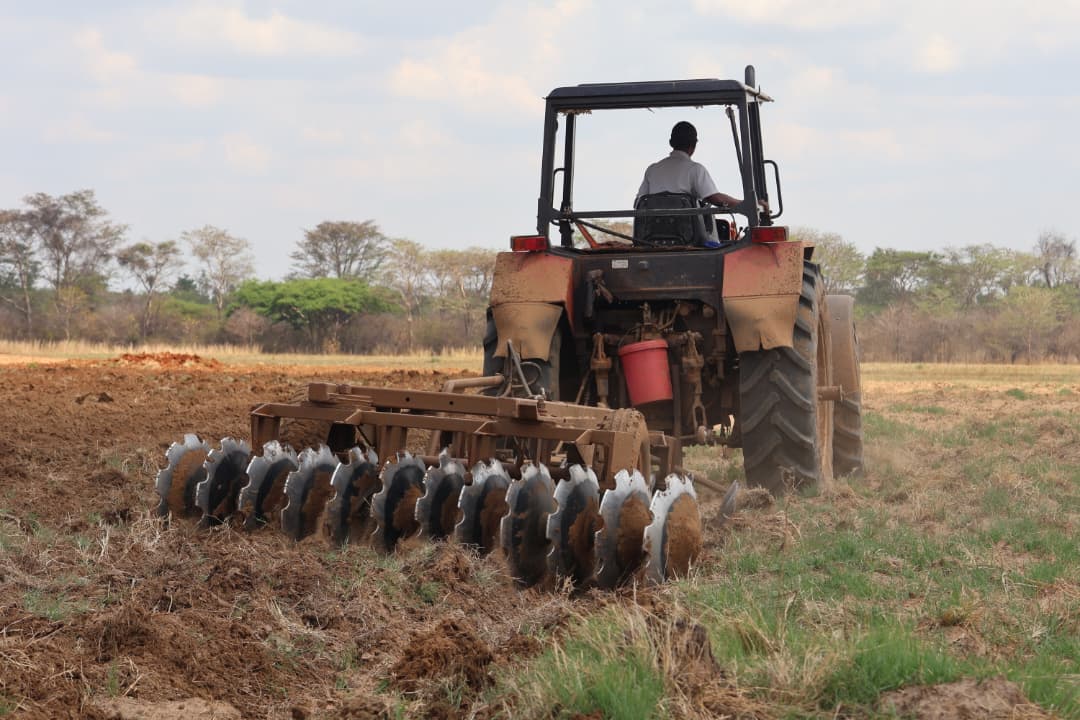







LARGE-scale farmers have thrown their weight behind Government’s new grain import levy and local procurement framework, describing the measures as critical to strengthening domestic production, stabilising grain markets and accelerating Zimbabwe’s food sovereignty agenda under Statutory Instrument 87 of 2025.
The policy introduces levies on selected grain imports while compelling processors to increase local sourcing, in what authorities and producers say is a coordinated strategy to protect local farmers, improve market certainty and reduce dependence on imported grain.
Chairman of the Strategic Grain Reserve (SGR) 200ha+ Club Zimbabwe, Mr Tichaona Mapfoche, said the measures were already restoring confidence among producers and encouraging long-term investment in grain production.
“We welcome and fully support Government measures to prioritise the procurement of locally produced grain,” he said.
“These measures create a stable and predictable market for farmers, strengthen confidence in domestic production, and ensure Zimbabwean grain is the first choice before imports are considered.”
Mr Mapfoche said policy consistency would stimulate investment, expand production and strengthen rural economies.
The SGR 200ha+ Club Zimbabwe, which brings together more than 500 large-scale farmers, is targeting expansion to more than 1 000 members by 2030 as part of efforts to significantly scale up national grain output in line with Vision 2030 and Zimbabwe’s food self-sufficiency targets.
Permanent Secretary for Agriculture, Mechanisation and Water Resources Development, Professor Obert Jiri, said Government was deliberately prioritising local production as part of a broader strategy to build a resilient and self-sufficient agricultural sector.
“There is no country that developed and became sovereign while depending on imports, especially when we talk of staple food,” said Prof Jiri.
He said the policy was not intended to shut out imports, but to ensure they do not distort local markets or discourage domestic investment.
“The idea is to promote local production while liberalising importation but without prejudicing local farmers,” he said.
Under Statutory Instrument 87 of 2025, processors, including millers and stockfeed manufacturers, are required to source at least 40 percent of their grain and oilseed requirements locally, with the threshold expected to rise to 100 percent by 2028.
The levy framework complements the policy by imposing charges on selected imports such as maize, soybeans and wheat to align imported grain prices with domestic production costs and safeguard local competitiveness.
Treasury Secretary Mr George Guvamatanga said the levy system was designed to eliminate distortions that disadvantage local producers.
“It is the considered position of Treasury that any importation of hard wheat in excess of the stipulated threshold should attract an appropriate levy or charge,” he said.
Mr Guvamatanga said the mechanism would help create parity between imported and locally produced grain while conserving foreign currency.
He added that proceeds from the levies would be ring-fenced to support farmer payments through the Grain Marketing Board (GMB) and finance smallholder irrigation development programmes, although all funds would still pass through the Consolidated Revenue Fund in line with public finance regulations.
The measures come as Government intensifies efforts to address infrastructure bottlenecks affecting agricultural productivity, particularly irrigation development, with several schemes facing delays linked to waterlogging, low dam levels and delayed energisation by ZESA.