





The Agony of Women and Girls in Accessing Abortion Services in Zimbabwe…
by Muchaneta Chimuka
Unsafe abortion cases remain rife among youth and adults in Zimbabwe.
The challenges are fuelled by exorbitant medical costs, restrictive legal frameworks, an inadequate network of youth-friendly clinics offering sexual and reproductive health (SRH) services, and deep-seated negative attitudes among healthcare providers.
Furthermore, infrastructure barriers, systemic policy hurdles, and a widespread lack of knowledge on how or where to seek safe services exacerbate the situation.
The World Health Organization (WHO) defines abortion as the termination of a pregnancy before the foetus is viable (can survive outside the uterus). This encompasses both induced abortion (intentional termination) and spontaneous abortion (miscarriage). The WHO Abortion Care Guidelines do not recommend setting a specific gestational age limit for access to abortion services.
According to the 2020 Voice and Choice Barometer, an alarming 24% of all pregnancies in Southern Africa end in abortion. While no Southern African country imposes a total ban on the procedure, the conditions under which women can legally obtain an abortion remain heavily restricted. Under Zimbabwe’s Termination of Pregnancy Act of 1977, aborting a pregnancy is strictly illegal unless sanctioned by specific government authorities.
For instances involving sexual assault, a court of law must formally confirm that the intercourse was unlawful before a termination can be approved.
Despite these narrow legal allowances, draconian bureaucratic procedures often stall time-sensitive interventions. There are numerous documented incidents where courts were supposed to legalise an abortion, but systemic delays forced women to carry pregnancies to term against their will.
Many have suffered severe pregnancy-related complications, while others have succumbed to clandestine, backyard abortions out of sheer desperation. Even when an abortion meets the rigid legal criteria, women and girls still face overwhelming challenges in accessing both abortion services and post-abortion care due to persistent institutional barriers and judgmental treatment from staff at public clinics and hospitals.
The harrowing experience faced by this author underscores the systemic failure of Zimbabwe’s public healthcare system.
In 2024, she suffered a missed miscarriage due to an unexpected drug interaction. She had been strictly taking a prescribed progestogen-only contraceptive pill alongside medication for high blood pressure, unaware that the hypertension drug would compromise her birth control.
After experiencing pregnancy symptoms, a series of conflicting medical tests and scans eventually confirmed a missed miscarriage, meaning she was carrying a non-viable, lifeless foetus.
Her doctor immediately wrote a referral letter to a nearby government hospital to initiate a legal medical termination, as carrying the non-viable foetus posed a direct threat to her life.
Her husband accompanied her to the hospital that night because she could not sleep due to fear that she was carrying a lifeless foetus. Upon arrival at Chitungwiza Central hospital book was stamped free of charge, and all services, including the termination process. However, things turned nasty when she was greeted by the nursing staff, who instructed her to drag a bed which was dirty so that she could find a corner to sleep.
The hospital lacked Cytotec (misoprostol), the essential emergency medication required to safely induce the termination.
She was told to wait until the following morning to purchase the pills from a private pharmacy.
During her brief, one-hour stay in the ward, Munatsi witnessed over twenty women stuck in limbo, waiting for abortion services that the hospital could not provide due to chronic drug stockouts.
Tragically, a woman in the adjacent bed died before receiving emergency care while the nursing staff remained in their offices, cracking jokes.
Terrified by the neglect, she discharged herself and sought help the next morning at a private clinic operated by Population Services Zimbabwe in Chitungwiza.
She was forced to pay US$120 out of pocket because standard medical aid packages in Zimbabwe do not cover abortion services.
Though the procedure was successful, it was physically painful and required follow-up care two weeks later to remove retained tissues and treat subsequent complications with antibiotics.
The writer’s clinical profile—characterized by advanced age, severe hypertension, and exceptionally high fertility—restricts her to non-hormonal contraceptive methods like condoms and copper intrauterine devices (IUDs).
Her case fully qualified for legal termination under the law, yet she was forced to bear a heavy financial burden that remains entirely out of reach for the vast majority of Zimbabwean women. She questioned why essential emergency drugs like Cytotec cannot be found in government hospitals and urged medical aid societies to consider funding abortion services.
The barriers are even more devastating for survivors of sexual violence. Rudo (25) (not her real name), from the high-density suburb of Mabvuku, was sexually assaulted while returning home from a community borehole.
Traumatized and facing intense victim-blaming from neighbours who claimed her clothing justified the assault, she chose not to report the crime to the police out of fear of hostile interrogation.
Her sister chased her away, and she took a job as a domestic worker, where she fell victim to further systemic sexual exploitation. In a state of desperation, she attempted to self-induce an abortion using aloe vera herbs, but all was in vain; hence, she carried the pregnancy to full term.
A similar historic tragedy is that of Mildred Mapingure of Chegutu, who became pregnant after being raped during an armed robbery in 2006, and she immediately reported the crime to the Chegutu Police to secure emergency medical assistance and prevent conception.
However, medical personnel at Chegutu Hospital refused to administer emergency contraception, leading to an unwanted pregnancy.
Mapingure embarked on a gruelling, bureaucratic journey through the Chinhoyi Magistrate’s Court to secure a legal termination certificate under Section 4 of the Termination of Pregnancy Act, but bureaucratic machinery issued the legal certificate six months later; it was far too late, forcing her to give birth to the robber’s child.
Nine years later, the Supreme Court ordered the Ministry of Health and the Ministry of Home Affairs to jointly pay Mapingure $6,500 in damages for the pain and suffering of a wrongful pregnancy, which societies feel its not enough considering the high costs of child maintenance in the country.
Yet, community advocates like Loveness Mainato of Chitungwiza argue that no monetary compensation can cure the lifelong trauma inflicted on women forced into unwanted motherhood by state delays.
Mainato noted that the strict requirements for legal dockets and documented evidence are fundamentally unfair, especially in an era where drug-facilitated exploitation leaves survivors unable to identify their abusers.
The severe restriction of domestic services has driven some women to extreme measures.
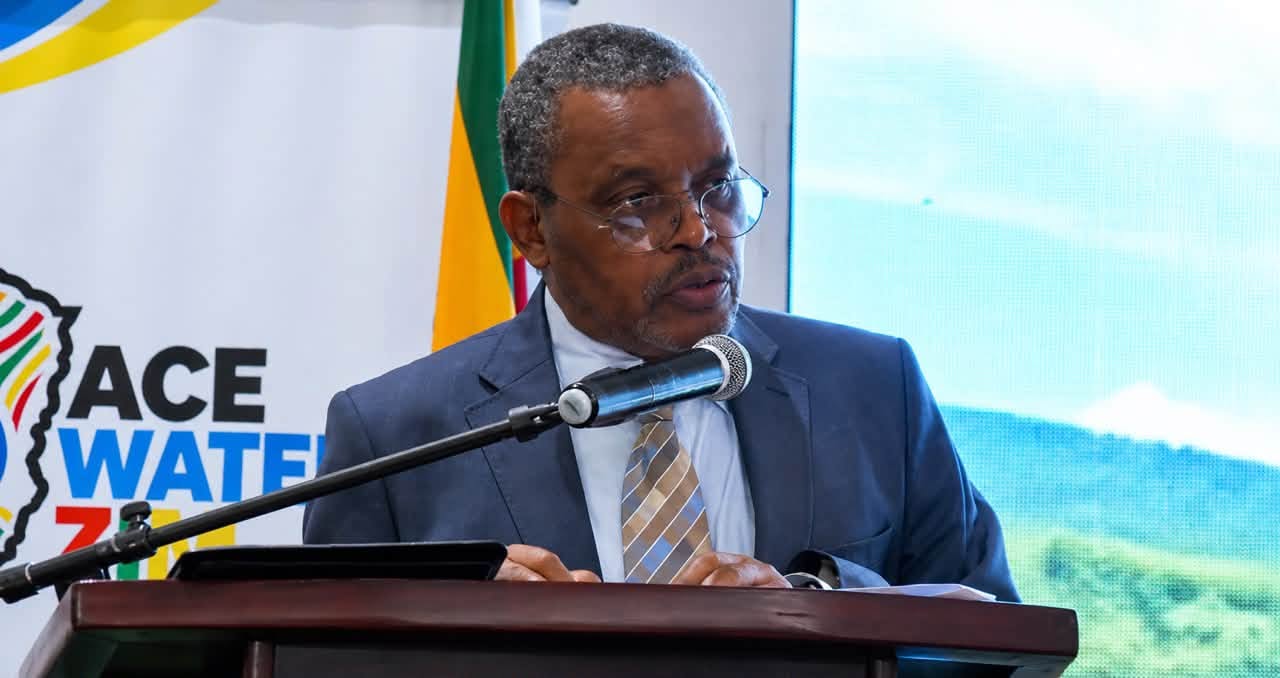
Hon. Fortune Daniel Molokele, a public health advocate and Member of Parliament for Hwange Central who chairs the Parliamentary Portfolio Committee on Health and Child, said women with financial means occasionally flee the country to seek care since the current constitution only restricts abortion based on three key areas: when it poses a risk to the mother or foetal abnormalities, rape or incest.
“In our community, a high-ranking church official who became pregnant through pastoral abuse sold her vehicle to fund a trip to South Africa, where abortion is legalized and accessible, to obtain a safe procedure and safeguard her mental health. However, vulnerable adolescent girls trapped in environments of poverty, drug abuse, and transactional sexual exploitation often cannot identify their abusers, making it impossible to open a police docket or navigate the legal channels required for a permitted abortion,” he said.
He said, recognizing the catastrophic maternal mortality rates linked to illegal procedures, the Ministry of Health and Child Care implemented a critical public health milestone by allowing women and girls to receive emergency post-abortion care at any public health institution without being questioned or subjected to legal prosecution.
However, despite this positive shift, backstreet abortions continue to surge, overwhelming Zimbabwe’s strained public healthcare infrastructure.
Recently, a striking public installation featuring uncovered graves in Epworth sparked intense viral debate across social media. The display was later revealed as a national public health intervention accompanying the launch of the investigative documentary, “In the Shadows of Epworth.” The project which aims to expose the hidden human toll of unsafe procedures and drive an urgent, rights-based dialogue regarding public health reform.
Prominent civil rights advocates are calling for an immediate, comprehensive overhaul of the nation’s reproductive laws.
Edinah Masiyiwa, former Executive Director of the Women’s Action Group (WAG), notes that the 1977 Termination of Pregnancy Act no longer fits with the current day and age to explicitly guarantees women the right to comprehensive safe reproductive healthcare.
Ekenia Chifamba, Founder and Executive Director of Shamwari Yemwanasikana, strongly advocates for the complete decriminalization of abortion to safeguard young women and girls.
She points out that adolescent girls continue to face significant challenges in accessing reproductive health services, as many are entirely unaware of legal provisions or are unable to navigate the required legal processes.
The ongoing domestic resistance to abortion reform stands in direct conflict with several international human rights treaties to which Zimbabwe is an active signatory which include Convention on the Elimination of All Forms of Discrimination against Women (1979),; Articles 4 and 14 of the Maputo Protocol, the African Charter on Human and People’s Rights on the Rights of Women in Africa, 2003); and Article 4 of the United Nations Declaration on the Elimination of Violence against Women (1993), which explicitly mandates that survivors of violence must have immediate access to just, effective remedies, comprehensive medical redress, and clear information regarding their legal rights.
Invoking these international instruments places a binding obligation on the Government of Zimbabwe to modernize its domestic laws to match its global commitments.
According to data from the Demographic Health Survey, an estimated 30% of all maternal mortalities in Zimbabwe are directly attributable to unsafe, back-street abortions.
Medical experts repeatedly warn that this official statistic represents just the tip of the iceberg, as many clandestine procedures and subsequent deaths go completely unrecorded.
The clinical risk of mortality from an unsterile, backyard abortion is many times higher than a termination performed under regulated, legal, and sterile surgical conditions.
While Section 76(1) of the Constitution of Zimbabwe explicitly guarantees every citizen and permanent resident the fundamental right to basic healthcare services—explicitly including reproductive healthcare—the daily realities for millions of Zimbabwean women and girls remain defined by systemic exclusion, legal barriers, and preventable suffering.