




Muchaneta Chimuka, Agriculture Correspondent
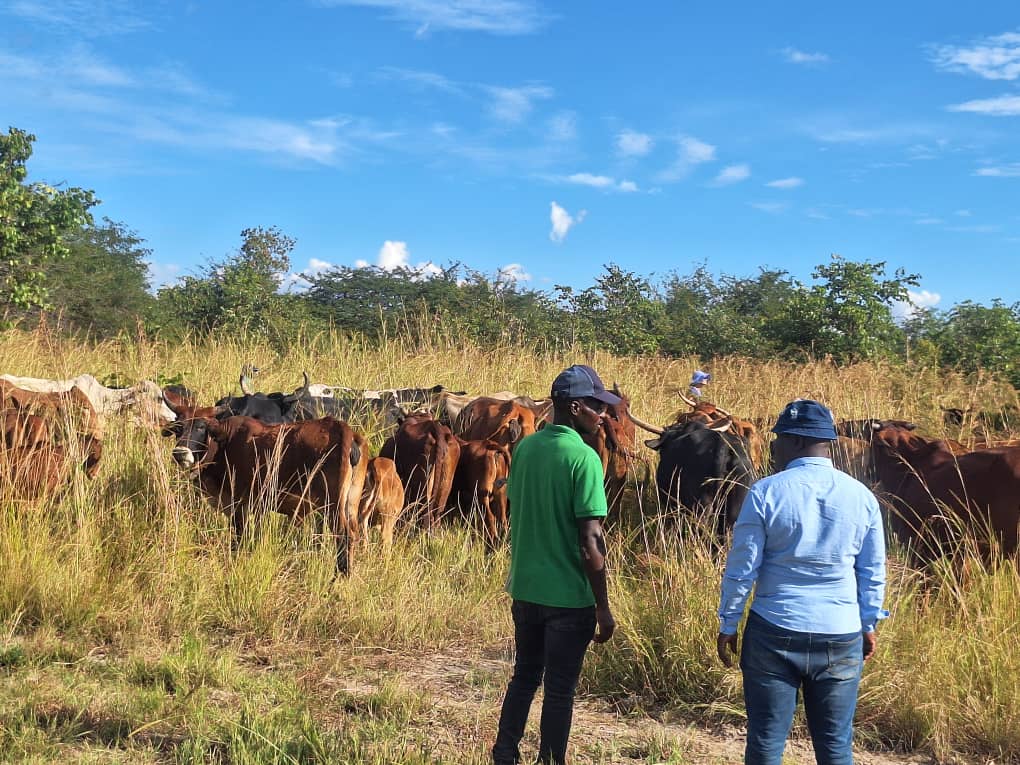
The Participatory Ecological Land Use Management (PELUM) Zimbabwe is reviving nomadic land-use practices through training farmers in Holistic Land Management (HLM) and biomonitoring to climate-proof agriculture and ensure sustainability.
HLM is a decision-making framework and grazing approach that manages livestock to improve ecosystem health, such as soil, water and biodiversity, while ensuring financial profit and social wellbeing.
The system treats the farm as a complex, interconnected “whole” rather than separate parts, often using high-intensity grazing to mimic natural herd behaviours and restore grasslands, while biomonitoring refers to the use of living organisms—plants, insects and microorganisms to assess ecosystem health, soil fertility and water quality.
HLM also enables land managers to track the impact of regenerative practices like controlled grazing and organic farming, allowing for evidence-based decisions to enhance sustainability and productivity.
The initiative, being spearheaded by PELUM Zimbabwe, complements Government’s efforts in uplifting the livelihoods of smallholder farmers through pioneering the National Development Strategy 2 (NDS2) of ensuring food security and better nutrition for all.
Recently, hundreds of farmers and extension officers from 13 districts across the country converged at Musoromuchena Skills for Life Centre in Makonde District, Mashonaland West, for HLM and biomonitoring training.
PELUM Zimbabwe country co-ordinator, Mr Theophilus Mudzindiko said the training was aimed at equipping participants with practical skills to assess the impact of holistic land and livestock management interventions.
“The training focused on biomonitoring, the use of living organisms such as plants, insects and micro-organisms to assess ecosystem health, providing farmers with practical, evidence-based tools to improve land productivity while safeguarding biodiversity.
“Biomonitoring allows us to determine the impact of this holistic land and livestock management programme,” he said.
Mr Mudzindiko said the programme focused on planned grazing and crop field impaction and biomonitoring skills that would enable participants to track changes in species diversity, soil fertility and water systems.
Makonde District Ward councillor, Mr Christopher Mupundu commended the initiative as a key driver of rural development and climate resilience.
“Musoromuchena Skills for Life is a registered institution under the Makonde Rural District Council and is doing commendable work with farmers in conservation agriculture, which is critical for sustainable development in our district.
“Biomonitoring training has broadened participants’ understanding of environmental management and sustainable farming practices, including water harvesting techniques and orchard management.
“These are practical interventions that ensure even our boreholes remain sustainable through proper environmental stewardship,” he said.
Livestock and grazing concepts consultant, Mrs Mupenyu Mberi said the introduction of innovative livestock management systems, particularly mobile paddocks, would address longstanding challenges faced by communal farmers.
“I was impressed by the mobile paddocks concept. This will greatly assist in controlling stray animals, a persistent problem in Makonde. It will also improve pasture management and livestock productivity,” she said.
National University of Science and Technology, forest resources and wildlife management lecturer, Dr Josephine Maringa said training on organic fertilisers was a game-changer.
“Our farmers will no longer depend solely on expensive inputs, ensuring continuity in farming even during difficult seasons. This is the essence of holistic land management and climate-smart agriculture,” she said.
Dr Maringa said the initiative would help curb distress livestock sales, which had historically affected farmers’ incomes and the proper management of the environment.
Agroecology farmer, Mr Dingani Ndlovu of Ward 18, Maphisa, Matabeleland North, said livestock management trainings were key since their province largely depended on cattle and goat farming.
“In the past, many farmers were forced to sell their cattle due to poor management systems and resource limitations. With these new skills, they will be able to manage and retain their livestock, thereby improving their livelihoods.
Through HLM, farmers are assured that their pastures will be rich with nutritious grass, and the fact that livestock hooves loosen the soil during grazing means underground water will be kept for long, resulting in easy access to water by farmers,” he said.
Hwange District, Igugu Trust programmes manager, Sibonikhuhle Moyo said, Musoromuchena Skills for Life was driving broader community empowerment initiatives, including women and youth development, income-generating projects, climate-smart agriculture and the preservation of indigenous knowledge systems such as seed saving.
The organisation’s “Grow What You Eat” philosophy aligns with national priorities on food security and rural industrialisation, positioning communities to become more self-reliant and resilient in the wake of climate change.
PELUM Zimbabwe’s programmes assistant, Mr Deltacuti Dube said by working closely with their organisation’s local authorities, Musoromuchena Skills for Life continued to demonstrate how grassroots initiatives could play a pivotal role in transforming rural livelihoods through sustainable land use and community-driven development.
“We want to ensure each household is food secure and does not rely on imported foodstuffs. Growing our own food agroecologically means we are assured of food safety and we can easily get rid of some genetically modified products,” she said.
PELUM Zimbabwe, a network of civil society organisations established in 1995, works with smallholder farmers to promote agroecology, sustainable livelihoods and environmental conservation through participatory land-use management approaches.