




Zimbabwe’s mineral-rich terrain has been centralized with lithium, the country’s so-called ‘white gold.’
Touted as the key to a greener future, lithium boom has captivated government leaders and global investors.
Yet beneath the shimmering promise lies a silent crisis, water.
In a nation grappling with prolonged droughts, failing reservoirs, and shrinking wetlands, the question that few dare to ask is, can Zimbabwe afford the water-intensive nature of lithium mining without sacrificing its future?
Vice Chairperson of the African Network of Parliamentarians on Climate Change, Joanna Mamombe said the water levels in Zimbabwe which are going lower each year is a critical issue which needs a special attention.
“There is need for balance to have sustainable mining in Zimbabwe. The rate at which lithium is being mined needs to be reconsidered so that the country balance mining activities verus water levels,” said Mamombe.
Zimbabwe possesses one of the largest lithium reserves in Africa, with the Bikita, Arcadia, and Sabi Star mines leading extraction.
By 2024, the country had attracted over US$1 billion in lithium investments, with expectations to become the world’s 5th largest lithium producer by 2025.
President Emmerson Mnangagwa declared lithium ‘a strategic mineral’, banning raw exports to encourage local processing and economic growth.
Lithium mining is highly water-intensive. According to the International Energy Agency, producing one tonne of lithium requires approximately 2.2 million liters of water.
In Zimbabwe, a country that saw the Kariba Dam drop to just 13% of usable water in 2023, this spells disaster.
Areas surrounding key lithium operations such as Goromonzi and Buhera are already semi-arid and have faced severe water shortages for domestic and agricultural use.
In Buhera, villagers report digging up t0 120 meters for boreholes. In Goromonzi, women walk over 10 kilometers daily to access water after streams dried up near Arcadia Mine.
The competition for water is intensifying, pitting mining companies against local populations.
Wetlands, natural water filters and storage systems are being cleared or polluted.
According to the Zimbabwe Environmental Law Organization (ZELO), over 300 hectares of wetlands in mining zones are under threat.
“I don’t think Zimbabwe has adequate water monitoring and regulatory framework. First lithium processing is water intensive. Our EIA process doesn’t require companies to undertake adequate underground hydro-logical impact assessment to understand how much water will be needed for a project.
“That’s a major gap. Without the hydro-logical impact assessment being incorporated at EIA stage we will not know how many people and how they are likely to be impacted. If you look at all EIA reports they miss this crucial element and it’s partly because our law doesn’t require it,” said Obert Bore of ZELO.
The government projects lithium revenues could boost GDP by 7% annually. However, this projection does not factor in the environmental restoration costs or water supply crises. Environmentalists argue that for every new mining license granted, no water impact assessment data is publicly available.
“Without transparent environmental governance, the country risks irreversible damage to ecosystems and communities,” said one environmentalist who attended the ‘People’s COP, an event organize by Center for Network Resource Governance (CNRG) under the the ‘ Beyond Greenwashing : Centering Marginalized Communities in Climate Action.’
He also said that Zimbabwe is in agro-ecological region IV and V, areas already categorized as dry. “Climate change models predict a 25% decrease in annual rainfall by 2030. If lithium mining continues unchecked, the country may be engineering own desertification. What happens when the mines run dry and the water is gone? What legacy to leave for the next generation?”
Experts are calling for a national strategy linking mineral development to water conservation.
Solutions include rigorous environmental impact assessments, investing in water recycling technologies for mines, and protecting upstream wetlands.
ZELO also recommends the creation of community water watchdogs to monitor extraction zones.
Tafara Chiremba said, “Zimbabwe’s lithium dream is real. But without urgent attention to water sustainability, it could become a nightmare. The government must ask, Are we mortgaging our water for mineral wealth? The silence on the water crisis today may echo as a roar of regret tomorrow. In the rush to lead the global green revolution, Zimbabwe must not forget its most precious resource,water.”
CNRG director, Farai Maguwu spoke of how the mining activities “We already have a water crisis in the lithium mining areas. We have seen community water being grabbed for lithium processing in Goromonzi and Sabi Star Buhere where they are taking water from Sabi river and in Bikita as well where six wards are being affected.
“Lithium is a heavy consumer of water and these companies are doing smash and grab, not harvesting in water harvesting or constructing their own dams so there is conflict,” said Maguwu.
According to a recent study by Tevin Tafese of the German Institute for Global and Area Studies (GIGA) institute, Africa’s trade structure remains largely extractive and unbalanced.
Tafese observes that “Africa mainly exports commodities to the EU, especially mineral fuels,” while “most African minerals are exported to China”.
This trade pattern, the study argues, reflects the continent’s low integration into global value chains and its “limited high-value activities” due to persistent colonial economic legacies and infrastructural weaknesses.
The result, Tafese warns, is that African economies remain “reliant on commodity exports and small-scale, informal mining and agriculture,” locking the continent into the lower end of global production systems.
This dynamic is clearly visible in Zimbabwe’s lithium rush, where Chinese firms dominate extraction and export of raw lithium ore from mines such as Bikita Minerals, Goromonzi, and Buhera.
Despite being marketed as a pillar of the global green transition, the sector is repeating old extractive patterns that externalize both profits and environmental costs.
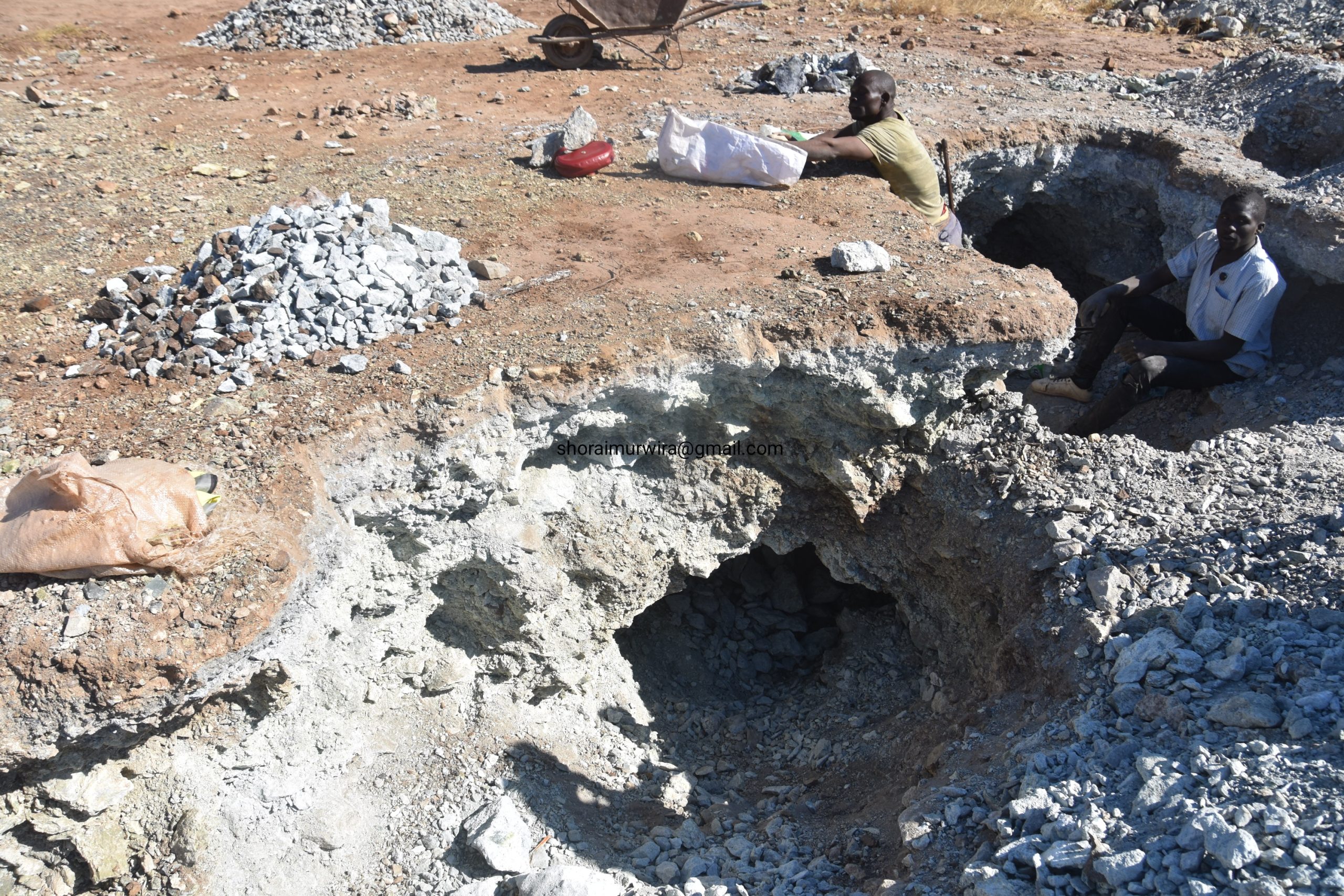
Communities living near lithium mining sites report water depletion, pollution of rivers and boreholes, and loss of grazing land.
As Tafese’s analysis implies, the absence of local value addition and industrial processing capacity means the benefits of the lithium boom are exported along with the minerals themselves, while Zimbabwe bears the brunt of ecosystem degradation and water scarcity.